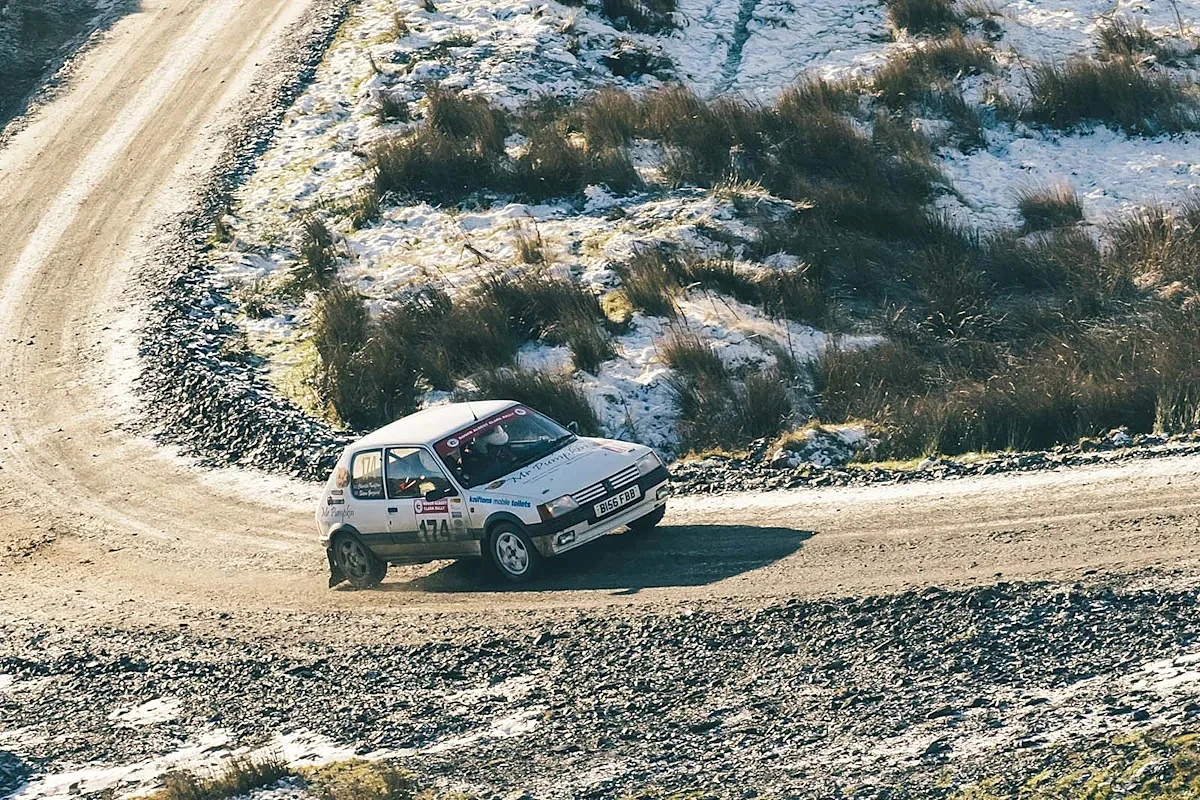
The Roger Albert Clark Rally isn't just another historic rally—it's a five-day, 300-mile endurance test that channels the raw spirit of the RAC Rallies from the 1970s and '80s. For any motorsport enthusiast, it's the ultimate WRC substitute, combining classic stages across England, Wales, and Scotland with the kind of grit that defines rallying's golden era.
Picture this: a snowy Wednesday evening in Carmarthen's Guildhall Square. The crowd is thick, the air electric. A line of historic rally cars stretches uphill, engines crackling to life. The unmistakable roar of a Lancia Stratos cuts through the winter chill. This isn't a typical town centre scene—it's the ceremonial start of one of the UK's toughest rallies.
I'm here as part of a service crew, supporting my godfather, Charlie, and his co-driver, Steve. Their weapon of choice? A hopped-up 1984 Peugeot 205 GTi—a car that may be old, but it's built to take on 35 stages and 313 competitive miles.
Behind every great rally car is a team that keeps it running. Our crew—Charlie, Steve, and service mates Andy, Stuart, my dad, and me—handles everything from tire changes to morale boosts. We're mechanics, coffee makers, and cheerleaders rolled into one. The pressure is real: the driver and co-driver focus on pace notes and racing lines, while we take care of the rest.
The service crew splits into two teams. One drives the chase car, following the rally car stage to stage. The other mans the service van—a mobile garage packed with spare parts, tools, a fridge, and plenty of hearty food. Each service stop gives us just 25 minutes to change tires, refuel, and fix any mechanical issues. We operate like a well-oiled Formula 1 pit crew, but with more mud and fewer champagne showers.
For anyone passionate about rallying, the Roger Albert Clark Rally is a bucket-list event. And for the Peugeot 205 GTi—and its driver—it's a chance to prove that old-school toughness still wins the day.