The game is called American Football. But why? Because the world is full of games known as "football"—from Canadian Football to Australian Rules, Association Football (soccer), Gaelic Football, and Rugby Football. In North America, folks simply call it "football." In the Deep South, it's considered "a necessity." In Texas, they call it "religion."
All these athletic competitions share a common ancestor: the sport of football (soccer). To much of the world, football is played on a pitch with two goals, using feet and any body part except arms and hands. In North America, that same game is called "soccer." Soccer is the grandfather of American Football.
The origins of soccer are debated—some say the Romans or the Chinese invented it. The oldest known football club dates back to 1796. Then came a pivotal moment in 1823 at the Rugby School for Boys in Warwickshire, England. During a soccer match, one boy picked up the ball and ran with it. Another tackled him to the ground. The boys loved the contact, and Rugby was born. Officially known as "Rugby Football," rugby is the father of American Football.
From this lineage, American Football emerged with its own set of rules and traditions—shaped by necessity, safety, practicality, and sometimes just dumb luck. Which brings us to one of the most iconic features of the game: the end zone.
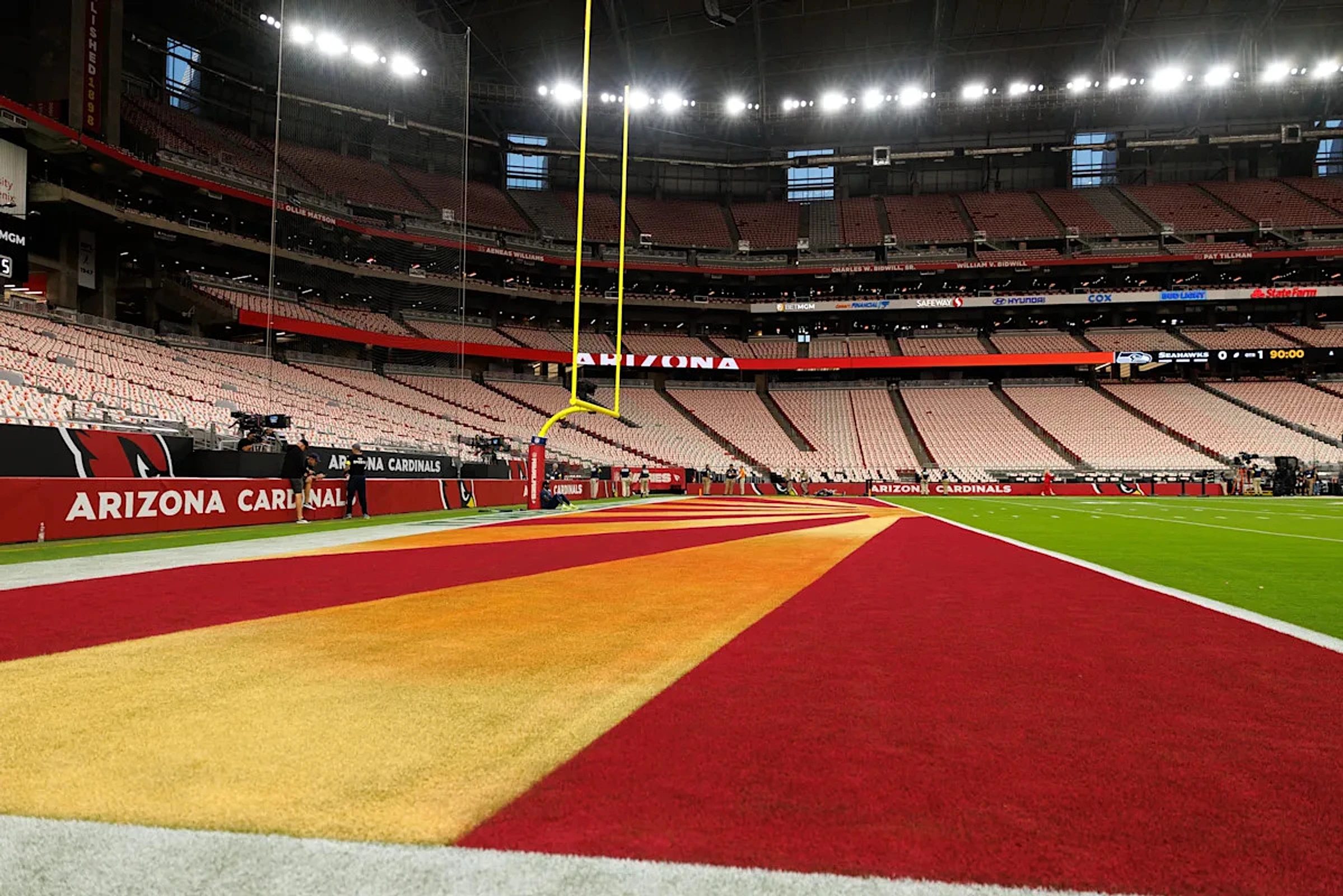
Believe it or not, early American football fields had no end zones. The game began without them. Players scored by carrying or kicking the ball across the goal line, but there was no designated area beyond it. It wasn't until 1912 that the end zone was officially introduced. The rule change came as a logical evolution: it gave receivers a defined space to catch passes and made scoring clearer for officials and fans. Today, the end zone is a vibrant canvas for home teams—adorned with bright colors, logos, and team names. It's where touchdowns happen, celebrations erupt, and history is made.
From humble beginnings without an end zone to the electric, fan-filled spaces we see today, this small innovation is a perfect example of how American Football continues to evolve—one rule, one tradition, one touchdown at a time.