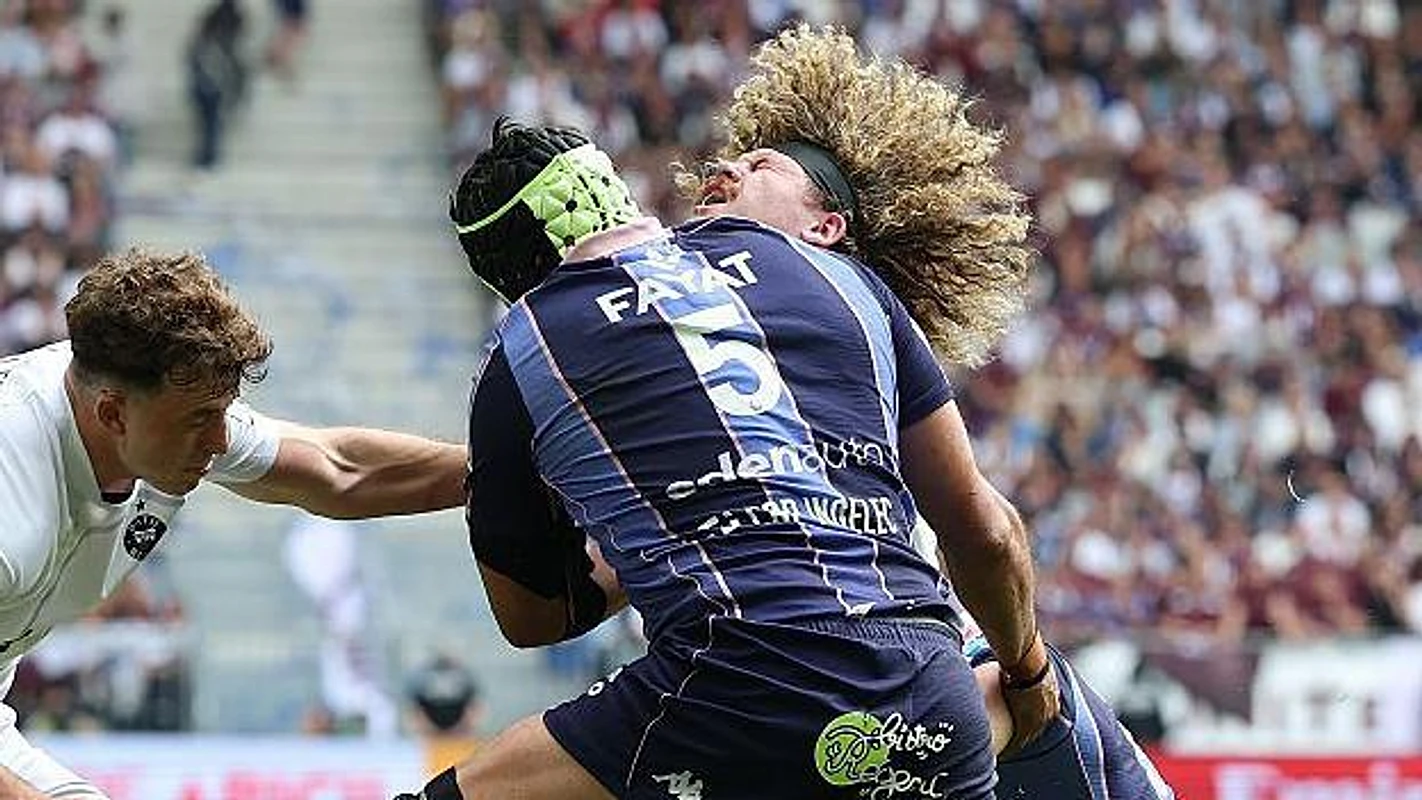
In the world of high-stakes rugby, the role of the Television Match Official (TMO) has once again sparked a heated debate—this time between Bath Rugby and French broadcasters. After Bath's narrow 38-26 semi-final loss to Bordeaux-Begles in the Champions Cup, head coach Johann van Graan voiced his frustration over what he perceived as missed foul play incidents, specifically three instances of head contact on his player Alfie Barbeary. But France Televisions, the tournament's French broadcaster, has fired back, defending their TMO protocol with a pointed statement.
"The video referee is the master of what he wants to see," said Cedric Beaudou, the rugby editor for France Televisions, in a response to the Associated Press. "Nowadays, he has access to every camera, every angle. Until he makes his decisions, we leave him to see what he wants to see. It's impossible to hide footage." This strong rebuttal comes after van Graan suggested that "certain things are not picked up when you play away from home in France," implying a potential bias in officiating.
While van Graan graciously acknowledged that his team was outplayed on the pitch, he couldn't shake the feeling that consistency was lacking. The European Professional Club Rugby (EPCR), which organizes the Champions Cup, has since stepped in to clarify the TMO process. "The TMO interventions are managed by the television broadcast," an EPCR spokesperson explained. "Two screens are used: one live, and another with a five-second delay. This is identical for all EPCR matches. Every incident the TMO wants to study can be the subject of a formal review."
As the dust settles on this semi-final controversy, all eyes now turn to the Champions Cup final on May 23, where Bordeaux-Begles will defend their title against Leinster. For rugby fans and players alike, this incident serves as a reminder of the fine line between technology and human judgment in the sport—a debate that's sure to continue long after the final whistle blows.