The San Diego Padres have been searching for stability behind the plate for nearly a decade, cycling through 23 different catchers since 2016. That's a staggering number for any franchise, and it underscores a persistent hole in the lineup that the front office has tried—and failed—to fill. Austin Hedges was once viewed as the long-term answer from 2015 to 2019, but that plan fizzled out. More recently, the organization placed its hopes on Luis Campusano, only to see that bet derailed by developmental struggles and friction with previous managers.
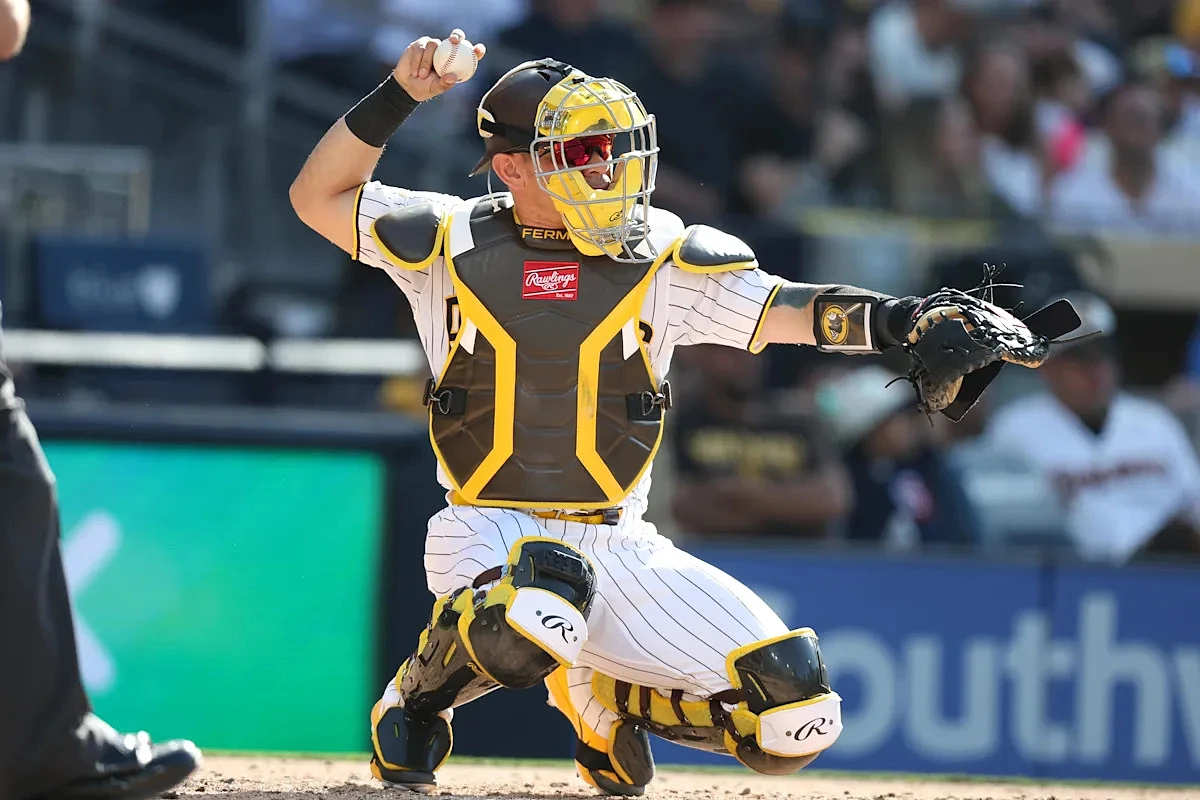
Now, in 2026, the Padres are leaning on Freddy Fermin as their primary backstop—but the results so far have been underwhelming. Manager Craig Stammen, a former Padres reliever who pitched alongside Campusano, made it clear from the moment he was hired that Campusano would have a role on the team. It seemed like a nod to general manager A.J. Preller's desire to finally give Campusano a legitimate shot. Yet, as Spring Training approached, there was little effort to acquire a backup catcher for Fermin, suggesting the team is still hedging its bets.
On paper, Fermin brings a defensive edge that Campusano simply can't match. He learned the craft behind Salvador Perez, a probable future Hall of Famer, during his time with the Kansas City Royals. His pop times and caught-stealing rates rank above the 75th percentile, and his overall defensive metrics are well above average. That's the kind of reliability any pitching staff craves.
But the bat has been a different story. Since debuting in 2022, Fermin has never played more than 111 games in a season, and his career .257 batting average reflects a hitter who struggles to make consistent impact. According to Baseball Savant, every offensive metric he's posted has rated below average—and that trend has held steady since his first big-league at-bat.
So far in 2026, Fermin has started 24 of the team's 41 games and made eight pinch-hitting appearances. The numbers are tough to stomach: a .169 batting average, a .265 on-base percentage, a .490 slugging percentage, zero home runs, and just three RBIs. It's a cold spell that mirrors the broader offensive struggles across the Padres roster, where most hitters are underperforming relative to expectations.
Fermin's production echoes what the Padres got from their catchers in 2025, when the tandem of Elias Diaz and Martin Maldonado failed to provide a spark. That's exactly why the team traded for Fermin at the deadline last season—to bring in a steady, defensive-minded presence who could at least hold the line. But with the offense sputtering, the Padres may need more than just a reliable glove. For a team with postseason aspirations, the question isn't just whether Fermin can improve—it's whether the organization can finally find a long-term answer behind the plate.