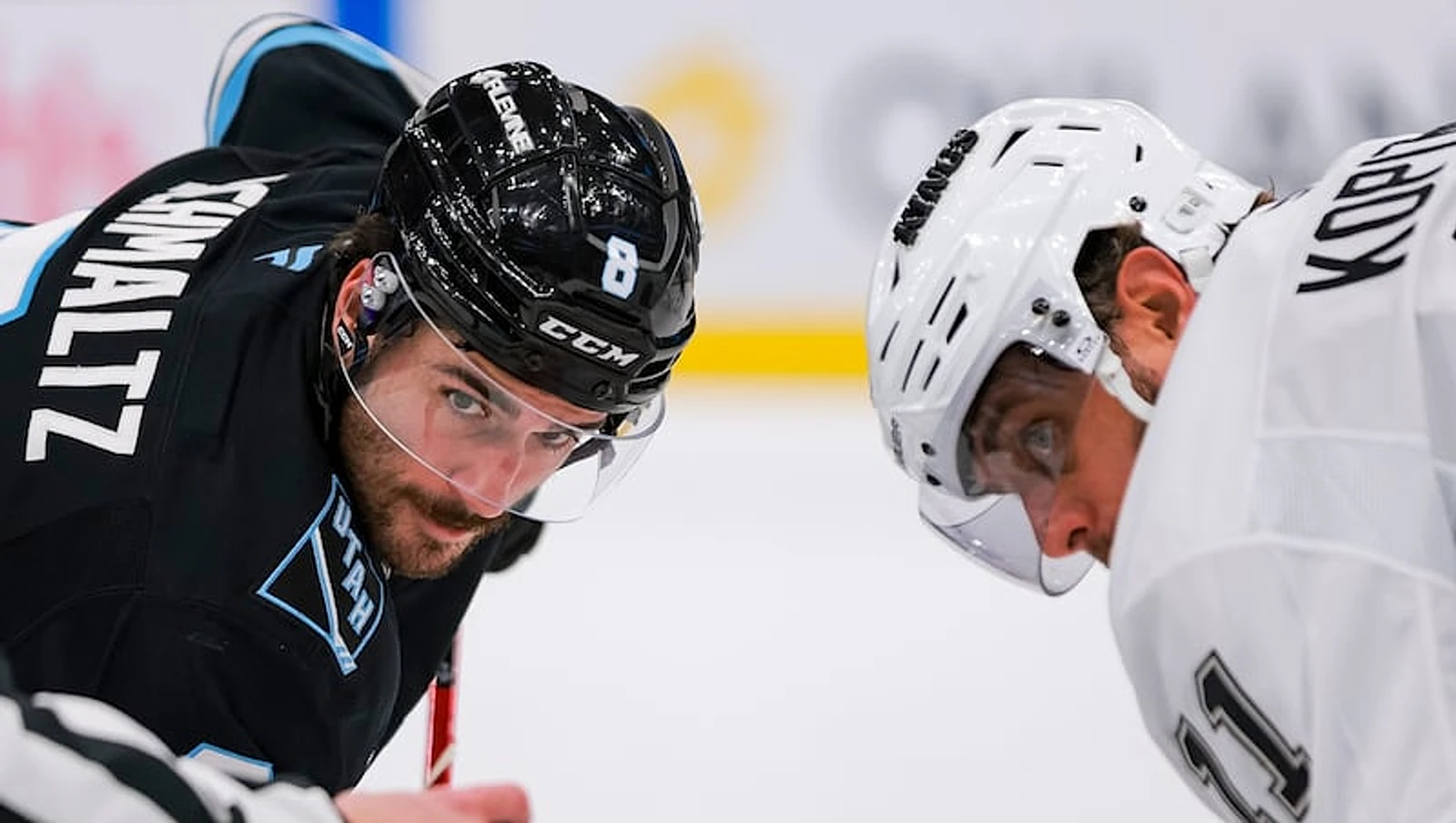
In the world of professional hockey, few positions are as coveted—or as hard to come by—as a first-line center. These elite playmakers rarely hit the free-agent market, and trading for one often costs a team its future. So when the Utah Hockey Club (now known as the Mammoth) found themselves in desperate need of an upgrade at that critical spot during their inaugural season, the path forward seemed uncertain.
Typically, teams have two options to fill a gap: acquire a new player or promote from within. The latter is always the dream—it saves assets, avoids overpaying in free agency, and feels like a victory for player development. But when injuries sidelined Logan Cooley, Barrett Hayton, Jack McBain, and Alexander Kerfoot all in the preseason, Utah’s center depth looked dangerously thin. The team’s summer 2025 additions had addressed nearly every need except this one, and suddenly, the season seemed at risk.
Enter Nick Schmaltz. The veteran forward, known more for his wing play in recent years, quietly slipped into the role that many had forgotten he was born to play. Growing up as a natural center, Schmaltz had shifted to the wing early in his NHL career, but when the Mammoth called, he was ready to answer. “I felt really comfortable there right from when they switched me there,” Schmaltz said in his exit interview. “I felt my 200-foot game was really good. More consistent every night, kind of bringing the same game and not as many ups and downs.”
It was like watching Clark Kent shed his glasses and reveal the Superman logo underneath. Schmaltz didn’t just fill the gap—he thrived. He set new career highs in goals and points, but his most impressive work came away from the puck. Defensively, he was a revelation, finishing sixth in the entire NHL in takeaways—yes, including defensemen. One standout moment came when he stripped Garnet Hathaway of a clean, close-range shot at an empty net, sparking a sequence that led to Clayton Keller’s game-tying goal and a dramatic overtime win for the Mammoth.
Schmaltz also logged 121 minutes on the penalty kill, proving he could be trusted in every critical situation. For a team that found itself short-handed before the season even began, his evolution was nothing short of found money—a reminder that sometimes the best solution is already in the room.