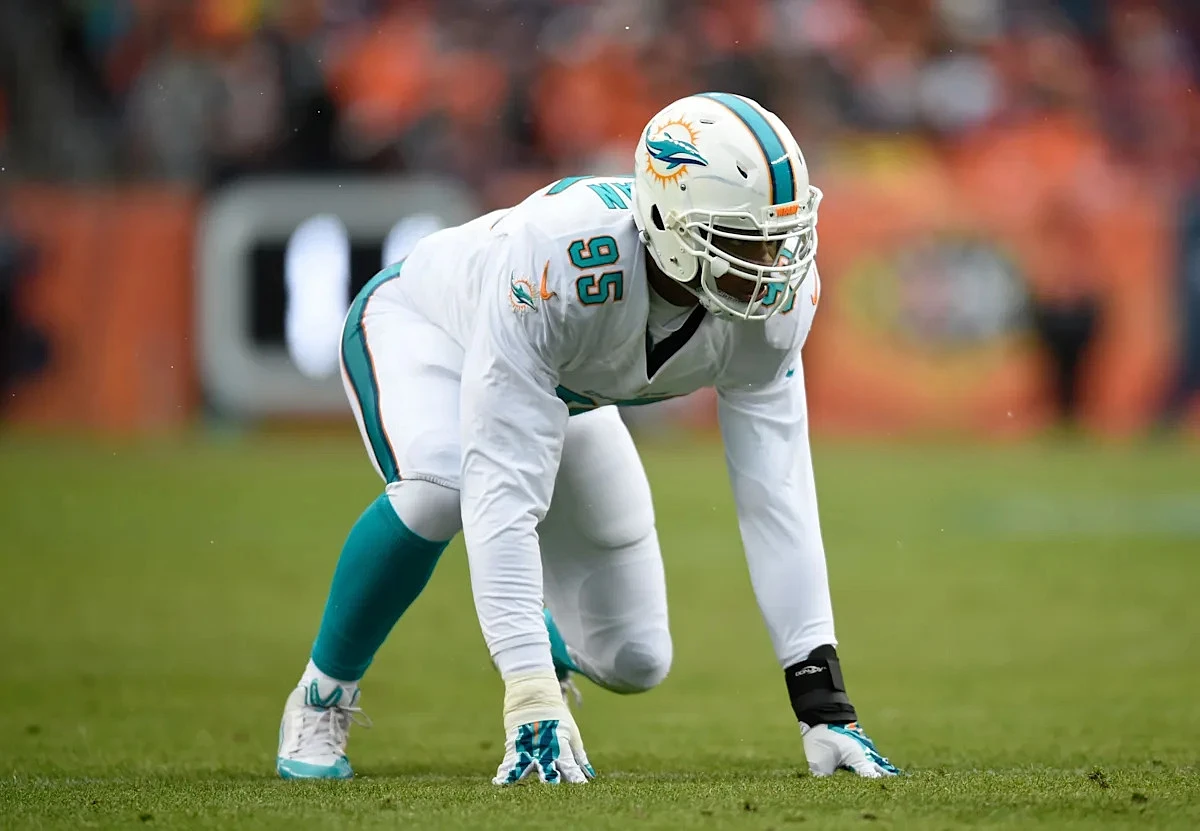
In the high-stakes world of the NFL draft, few stories serve as a cautionary tale quite like that of Dion Jordan. Selected third overall by the Miami Dolphins in 2013, the Oregon standout was expected to become a dominant force on the defensive edge. The Dolphins even traded up, sacrificing picks No. 12 and 42 to the Oakland Raiders, banking on Jordan's generational talent. But what followed was a journey marked by struggle, self-reflection, and ultimately, accountability.
Jordan's rookie season fell far short of expectations. In 16 games, he managed just 26 tackles, five quarterback hits, two sacks, and two passes defensed. The whispers of disappointment quickly grew louder. Looking back, Jordan admits he was his own worst enemy. "I wasn't playing free," he told The Athletic. "I was in my head too much. You feel me? And then it affected my body... I started playing the victim card. It was 'why me?' So I'm gonna drink more because I can't get in trouble for drinking. And then there were party drugs... I should have been focusing on what it is to be a pro. I didn't know how to structure myself, how to be disciplined."
That lack of discipline spiraled quickly. A failed test for a muscle relaxant led to excessive drinking and eventually MDMA use, resulting in a four-game suspension to start his second season. Before he could even take the field in 2014, another failed test for marijuana added two more games to his sideline sentence. The following year, Jordan missed the entire 2015 season due to a diluted sample suspension. When he attempted a comeback in 2016, injury kept him out for a second straight year.
The Dolphins released Jordan in 2017, and he landed with the Seattle Seahawks for a two-year stint. But injuries limited him to just 17 games. Then, in the 2019 offseason, another suspension—this time 10 games for Adderall—derailed his momentum. "A dumb, dumb mistake," Jordan admitted. "It was trying to find a way around hard work to get what I wanted out of football because my body was essentially not allowing me to do what I wanted to do."
After brief stops with the Raiders and San Francisco 49ers, Jordan ultimately walked away from the game. "I was pushing myself mentally and physically really hard and got to the point where I didn't want to keep putting myself through some of that," he said. For fans and athletes alike, his story is a powerful reminder that even the most promising careers can be derailed by off-field choices—and that true growth begins with owning those mistakes.