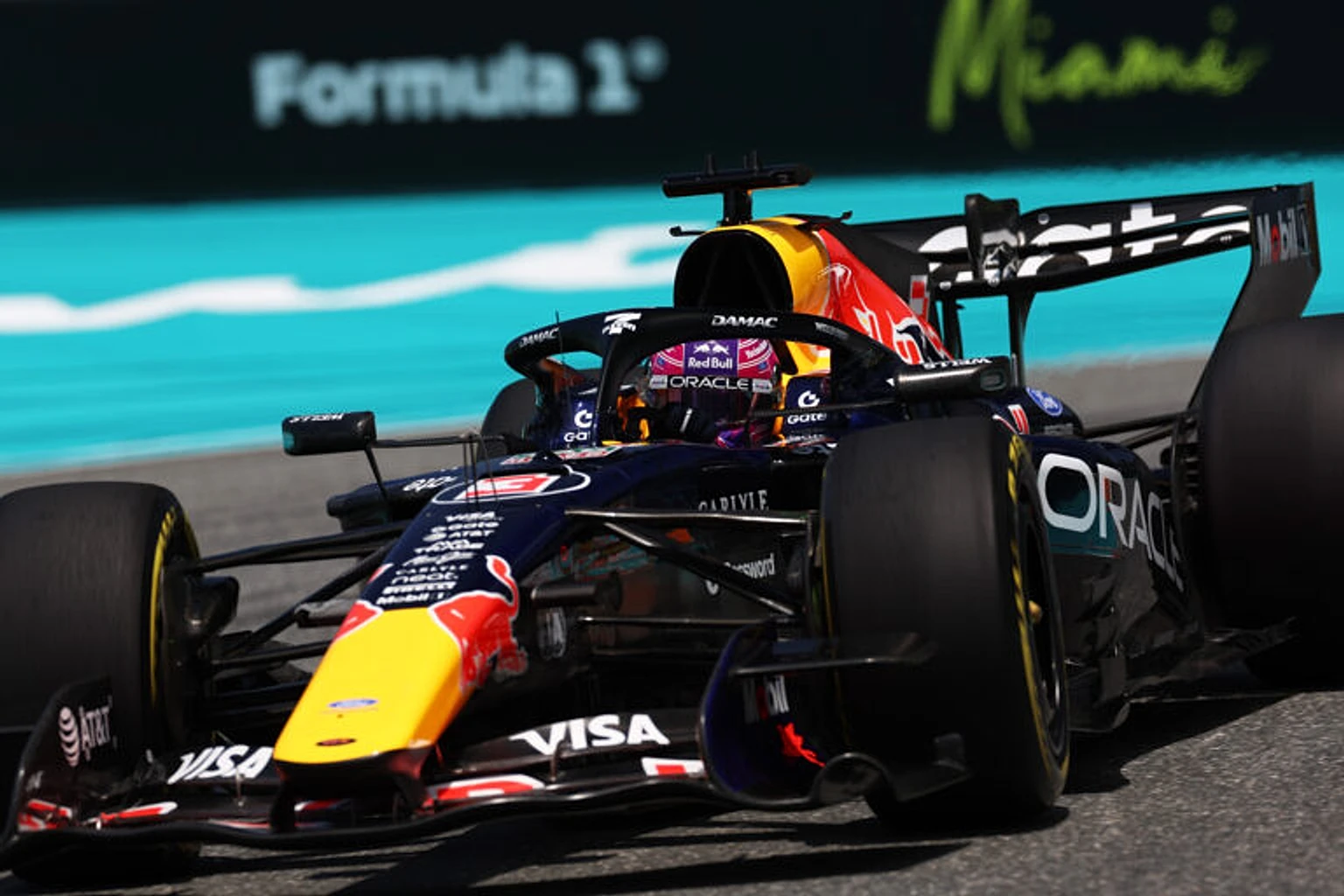
The Miami Grand Prix brought more than just glitz and glamour to the paddock—it unveiled a new aerodynamic chess match between two of Formula 1's biggest powerhouses. Red Bull finally debuted its rotating rear wing concept at the Miami International Autodrome, sparking immediate comparisons to Ferrari's similar innovation. While the Milton Keynes team insists the design is entirely their own, developed long before Ferrari's version hit the track, the real story lies in what makes these wings tick differently.
An aerodynamicist known as Dr. Obbs on X recently broke down the geometry of both wings, offering fans a fascinating glimpse into the engineering battle. Both designs allow the rear wing to rotate a full 180 degrees, dramatically reducing drag on long straights. But the path each team took to achieve this—and the trade-offs they made—could determine who holds the upper hand at high-speed circuits.
Ferrari's approach is the more conservative of the two. Their upper flap pivots from a hinge mounted in the endplates, preserving the critical overlap between the flap and the mainplane at the slot gap. This relationship is key to maintaining aerodynamic efficiency, and Ferrari's solution keeps it intact. Red Bull, however, chose a bolder path. By keeping a single central actuator, the entire mechanism rotates the flap rearward underneath the main element. From a side view, the flap appears to lift almost completely clear of the endplates, connected only by lateral supports. It's a more aggressive interpretation of the concept, but one that comes with a sacrifice.
According to Dr. Obbs, Red Bull's design forces the team to give up the overlap between the first and second elements of the rear wing. "Because the RBR wing rotates backwards under the main element, the leading edge of the second element must be stepped back from the trailing edge of the first element," they explained. Ferrari's older design, by contrast, maintains that overlap at the slot gap, creating a more efficient setup. This trade-off could prove crucial on tracks where every fraction of a second counts.
For fans and collectors of F1-inspired gear, this technical duel adds another layer of excitement to the season. Whether Red Bull's bold gamble pays off or Ferrari's conservative efficiency wins the day, one thing is clear: the battle for aerodynamic supremacy is just heating up. Stay tuned to our blog for more insights from the world of motorsport, and gear up for race day with apparel that celebrates the innovation and speed of Formula 1.