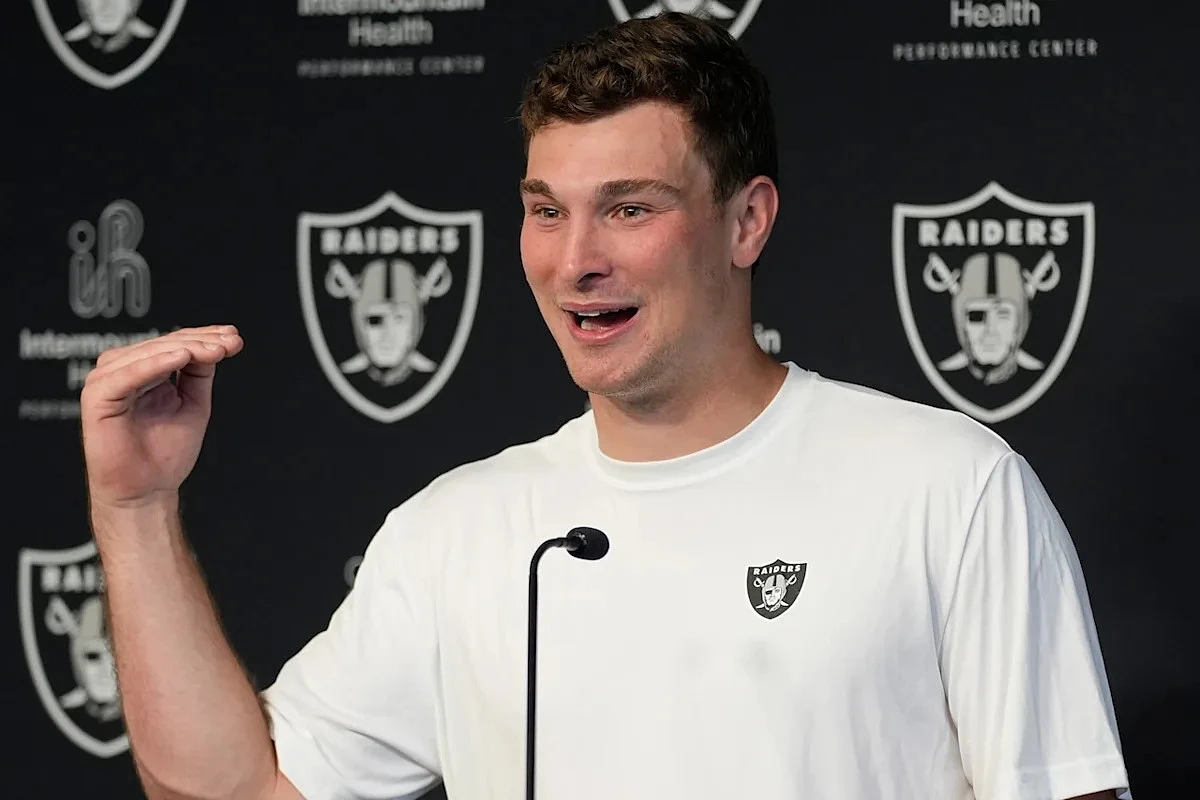
When a White House invitation and NFL OTA commitments collide, the decision isn't always as straightforward as it seems. Former Philadelphia Eagles linebacker Emmanuel Acho recently weighed in on this very dilemma, sparked by Indiana quarterback Fernando Mendoza's choice to skip the Raiders' first organized team activity in favor of joining his Hoosiers teammates at 1600 Pennsylvania Avenue.
On the latest episode of "Speakeasy," Acho made his stance crystal clear: he would absolutely attend the White House ceremony. But his reasoning had nothing to do with politics or protocol. It was deeply personal—rooted in family legacy and generational achievement.
"In what world would your grandparents have thought you'd be at the White House?" Acho asked passionately. He shared that his father grew up in a village in Africa, and the idea that his son—born of that lineage, carrying that history—could stand inside the White House as a nationally recognized champion is nothing short of extraordinary. "My grandma, who grew up in a rural village of Nigeria, couldn't have imagined this. I'm not going to deny my legacy that achievement."
For Acho, the invitation represents more than just a photo op. It's a testament to how far his family has come—a story that transcends football and speaks to the American dream itself.
However, not everyone on the panel shared that view, and their honesty made for compelling debate. When asked directly if he'd go, another panelist offered a more cautious perspective: "My OG told me that a lot of times things don't age well, and I think that would be the case for certain White House pictures."
The White House has always carried symbolic weight, but in today's polarized climate, that symbolism has become more complex. Who occupies the Oval Office matters to some people—a lot. And a photograph doesn't come with a caption explaining your reasons for being in it.
The debate also touched on the nature of patriotism in sports. One panelist drew a sharp distinction between a college football champion visiting the White House and an Olympian doing the same. Olympians, they argued, explicitly represent America on a global stage, making the recognition feel more organic. College football's connection to patriotism, they suggested, can sometimes feel less defined.
Whether you'd trade practice time for a White House visit or not, one thing is clear: these decisions carry weight far beyond the football field. They're about identity, legacy, and what it means to represent something bigger than yourself.