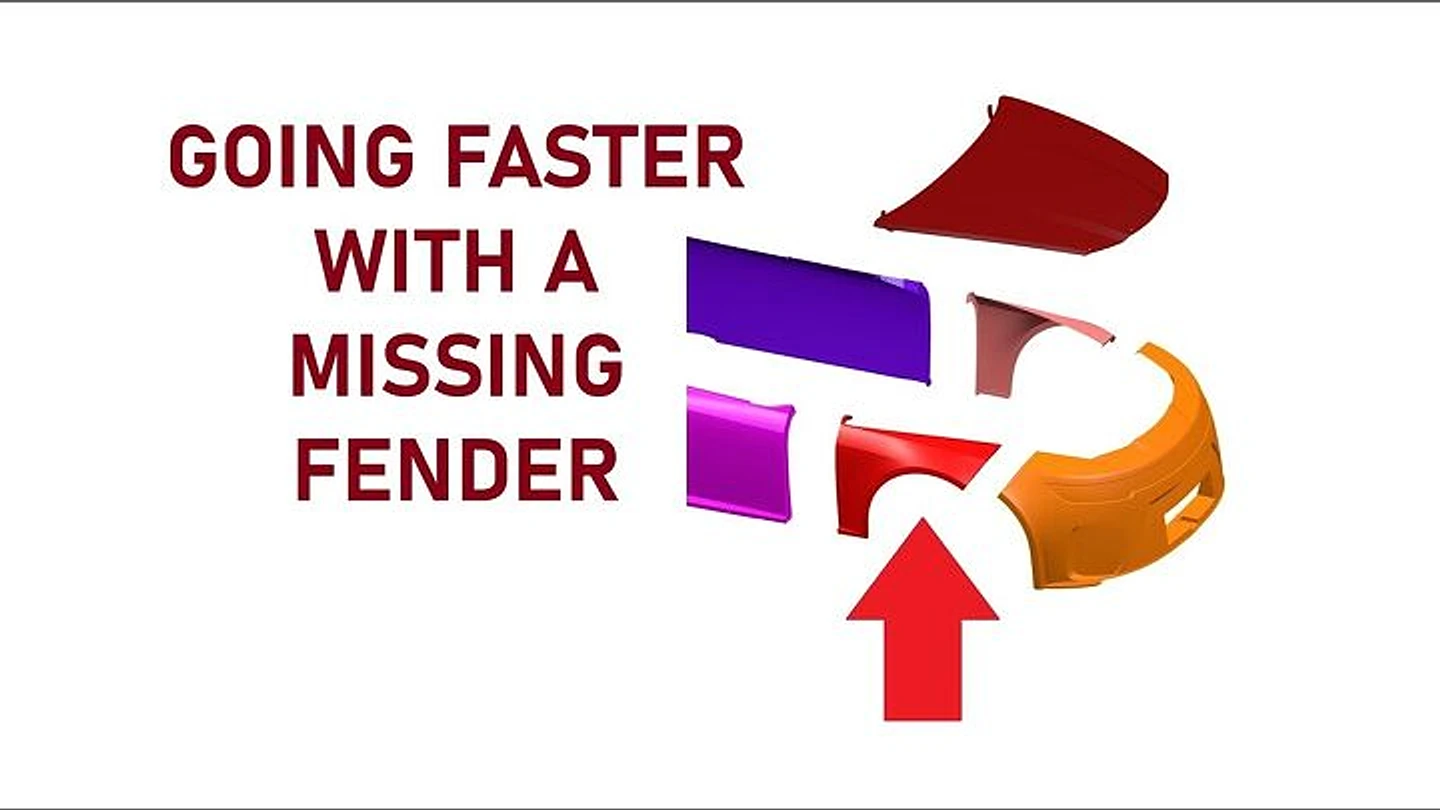
Tyler Reddick's victory in the Autotrader 400 at Atlanta's EchoPark Speedway was anything but ordinary. The win for the driver of the No. 45 Toyota Camry came after a dramatic late-race incident that left his car missing a crucial piece of bodywork: the right-front fender. This immediately sparked a debate among fans and analysts—did that missing fender actually give him an aerodynamic advantage on his charge to the checkered flag?
In NASCAR, aerodynamics are everything, especially on a fast, drafting-heavy track like Atlanta. A car's body is meticulously designed to manage airflow for maximum speed and stability. So, when a major piece like a fender goes flying, it completely changes the aerodynamic equation. The question becomes whether that change is a catastrophic loss of downforce or a surprising reduction in drag.
As the laps wound down, Reddick found himself in a fierce battle for the lead. The contact that ripped the fender away could have been a race-ending disaster. Instead, Reddick managed to keep control of his wounded Camry. What followed was a masterclass in damage control and adaptation, as he navigated the final stages with a car that was handling very differently than it had all day. The visual of the battered Toyota leading the pack became the defining image of the race.
To understand if the missing fender was a secret weapon, we need to break down the physics. On one hand, losing a fender disrupts the carefully engineered airflow, often causing increased drag and a loss of front-downforce, which can make the car unstable and hard to turn. On the other hand, in specific high-speed, drafting scenarios, reducing frontal area or altering air pressure can sometimes decrease overall drag, potentially allowing for a higher top speed on the straights. The real answer lies in how Reddick and his team adapted their driving and strategy to the car's new, unintended configuration in those critical final moments.