

It’s almost impossible to judge the true value of a draft pick in real time. People love labeling selections as “reaches” or “steals,” but that kind of talk is more guesswork than anything else at this point. What actually matters is how a player performs over time on the field and that obviously takes time to find out.
We also don’t have access to every team’s draft board, so there’s no way to know exactly how each front office viewed these players. What we can do, though, is stack the Lions’ picks up against the general media consensus to see whether they selected players earlier or later than expected. It’s not a flawless approach—media rankings can differ quite a bit from team evaluations—but many analysts are well-connected and have spent years sharpening their scouting process.
So let’s look at each pick the Lions made, and compare it to the 2026 NFL Draft Consensus Big Board from our close and personal friend Arif Hasan, which ranked 300 players according to averages from over 100 different media big boards this draft cycle.
Consensus big board ranking: 31Lions draft selection spot: 17
The Lions’ first pick of the 2026 NFL Draft was a reach according to the big board, but Miller was still considered a prospect with a first-round grade. As the draft’s OT6, Miller was the fourth offensive tackle off the board behind Spencer Fano (OT2), Francis Mauigoa (OT1), and Kadyn Proctor (OT4). He may have been a “reach,” but the “Positional Villains” valued filling a long-term need at a premium position. It’s also fair to wonder how much Miller’s positional rigidity at right tackle caused him to be rated lower than other offensive tackles who primarily played on the blindside like Caleb Lomu (OT5) or Monroe Freeling (OT3).
Miller will come into training camp as the presumed starter at right tackle pending the outcome of a camp battle (scuffle, tussle?) with Larry Borom.
Consensus big board ranking: 63Lions draft selection spot: 44
Detroit didn’t let the board come to them for this pick, choosing to package picks 50 and 128 to move up six spots to No. 44 and select Derrick Moore. Back-to-back picks filled needs the Lions had coming into the draft, and this pick was another reach, but much like the selection of Miller in Round 1, Moore was still viewed as a consensus pick within the round he was drafted.
Ranked as EDGE11, only Gabe Jacas (EDGE10) and Zion Young (EDGE7) were the higher-ranked edge defenders still on the board when the Lions were on the clock. Young would end up being the 45th overall pick to Baltimore—a team the Lions leapfrogged intentionally to ensure Moore would be available—and Jacas was pick No. 55. Moore figures to start as a subpackage player, insulated by the team’s signing of DJ Wonnum, an established edge setter on first and second down. With some seasoning, Moore could eventually become a three-down player for the Lions and finally provide them with a viable edge defender opposite of Aidan Hutchinson.
Consensus big board ranking: 167Lions draft selection spot: 118
For the third selection in a row, Rolder filled a need vacated by a veteran departure in free agency—in this case, Alex Anzalone as the team’s WILL linebacker. Rolder was ranked LB16, but was selected far earlier than LB15 (Taurean York, undrafted) and LB14 (Aiden Fisher, No. 253). In fact, only seven of the consensus board’s linebackers went before Rolder, and linebackers eight through 15 all were selected after pick No. 118.
Rolder feels like a bit of a project at linebacker, but he should be a heavy contributor on special teams in his rookie season.
Consensus big board ranking: 61Lions draft selection spot: 157
Keith Abney II was someone Holmes was considering at 118, so it’s no surprise he was the pick at No. 157. The sheer value of selecting Abney, the 61st-ranked player on the consensus big board, dragged the Lions’ draft from the bottom of the value rankings to being perfectly average (16th). Abney was one of the best values in the 2026 NFL Draft with a 96-pick discrepancy between his ranking on the big board and slot he was actually drafted.
The cornerback with inside-outside versatility should immediately challenge for the team’s open spot at nickel, depth on the outside, and provide special teams snaps, too.
Consensus big board ranking: 200Lions draft selection spot: 168
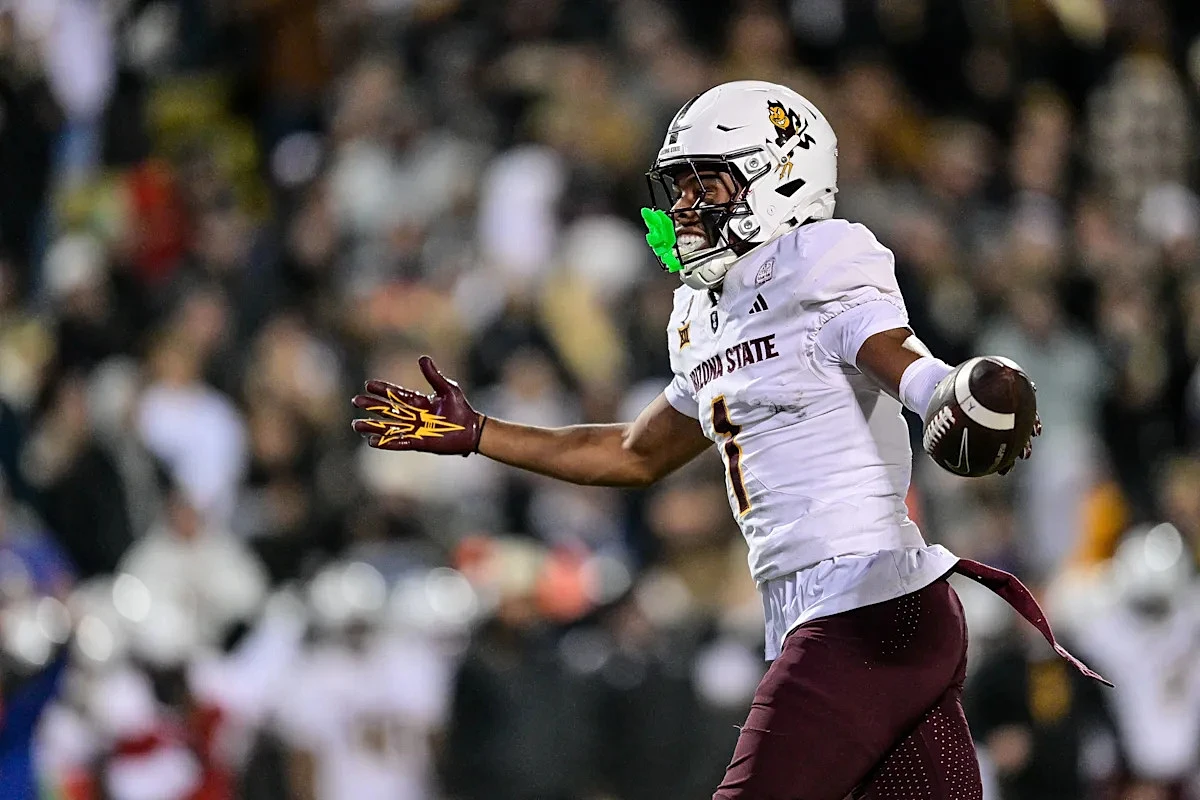
Detroit traded up for a second time in this year’s draft when they moved up to grab Kendrick Law, a speedy wide receiver and return specialist with an eagerness to get involved in the blocking game. Law was a bit of reach as a consensus mid sixth-round pick but selected by Detroit in the late fifth round.
Consensus big board ranking: 227Lions draft selection spot: 205
Another slight reach by the Lions is overshadowed by Skyler Gill-Howard’s story, one that will win you over if you aren’t already familiar with the 23-year-old’s journey to the NFL. Detroit sure would welcome some more playmaking from the three-technique, and Gill-Howard will get his chance in training camp to audition for a spot on the team’s 53-man roster.
Consensus big board ranking: 378Lions draft selection spot: 222