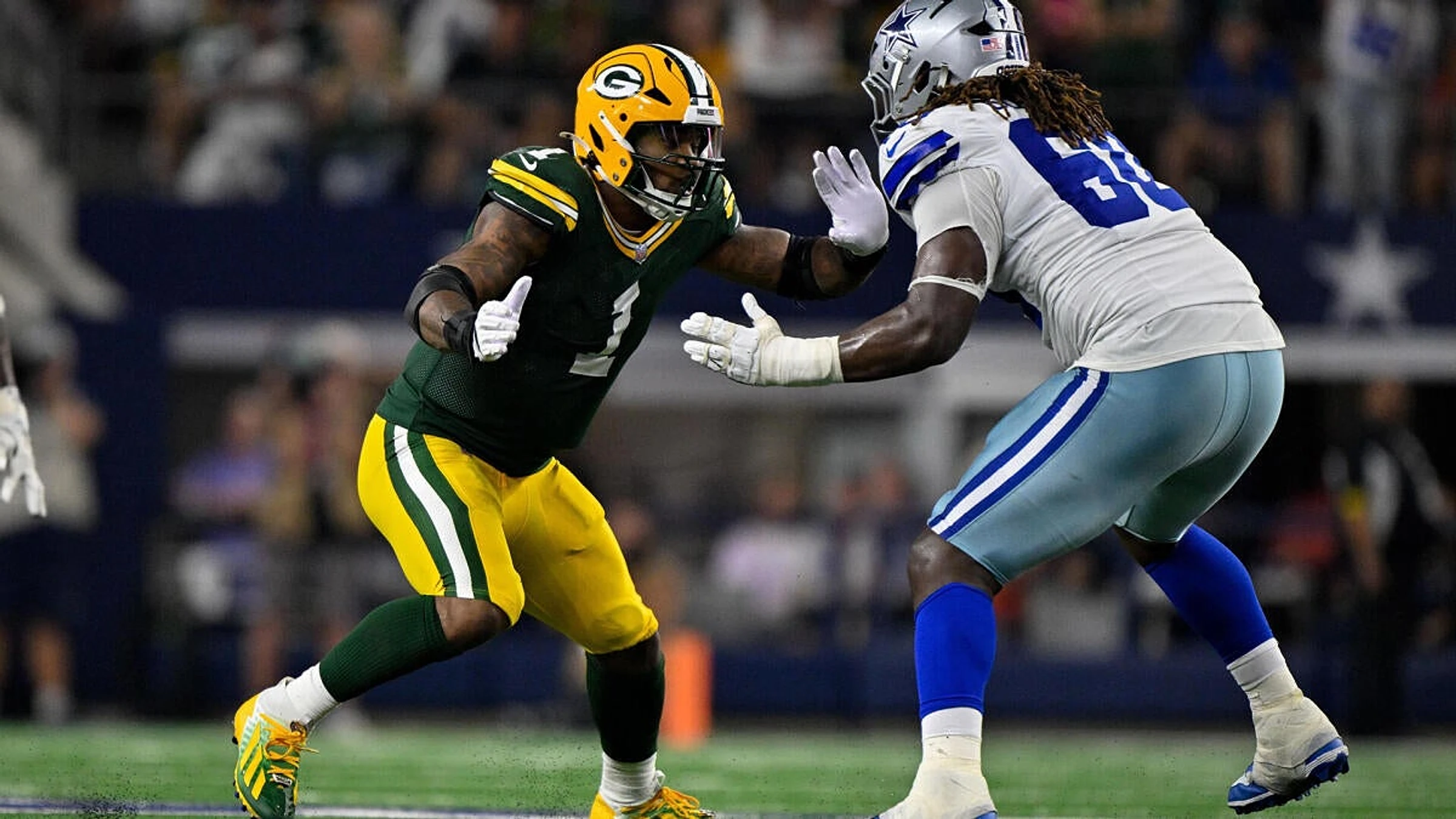
The Dallas Cowboys entered this offseason with one glaring mission: fix a defense that surrendered a league-worst 30.1 points per game. But for every step forward they take, the shadow of Micah Parsons—the All-Pro edge rusher they let slip away—looms large.
Instead of locking up Parsons when he became extension-eligible in 2024, Dallas chose to wait. And wait. And wait some more. By the time negotiations finally gained traction in 2025, the edge-rusher market had reset multiple times. Talks turned public, then personal, and ultimately broke down. Just one week before the 2025 season, the Cowboys traded Parsons to the Green Bay Packers for two first-round picks and three-time Pro Bowl defensive tackle Kenny Clark. Parsons, meanwhile, got exactly what he wanted from Green Bay: a four-year, $186 million extension with $120 million fully guaranteed.
So how did Dallas spend that trade haul? They flipped some of the capital for Jets defensive tackle Quinnen Williams, used the Packers' 2026 first-round pick on edge rusher Malachi Lawrence, and traded back to grab cornerback Devin Moore and defensive lineman LT Overton. As part of the Williams deal, Dallas will also send the higher of its two 2027 first-round picks to New York.
Cowboys executive Stephen Jones isn't backing down from the decision. "We feel really good about it," he told Mad Dog Sports Radio. "Obviously, much respect for Micah and what he stands for and how he plays and the caliber of player he is, but at the same time we feel good about what we've added via that trade."
Jones pointed to the leadership and culture boost from veterans like Quinnen Williams and Kenny Clark, as well as the arrival of safety Caleb Downs—a player he called "the same type of character" who elevates everyone around him. He also highlighted second-year edge rusher Donovan Ezeiruaku, a 2025 second-round pick, as part of a growing young core.
Depth over star power? That's the Cowboys' bet. But replacing one of the NFL's most disruptive defenders—a player who changes game plans before he even steps on the field—is a gamble that could still prove costly. For a team desperate to climb out of the defensive basement, the math may look good on paper, but the proof will only come on Sundays.