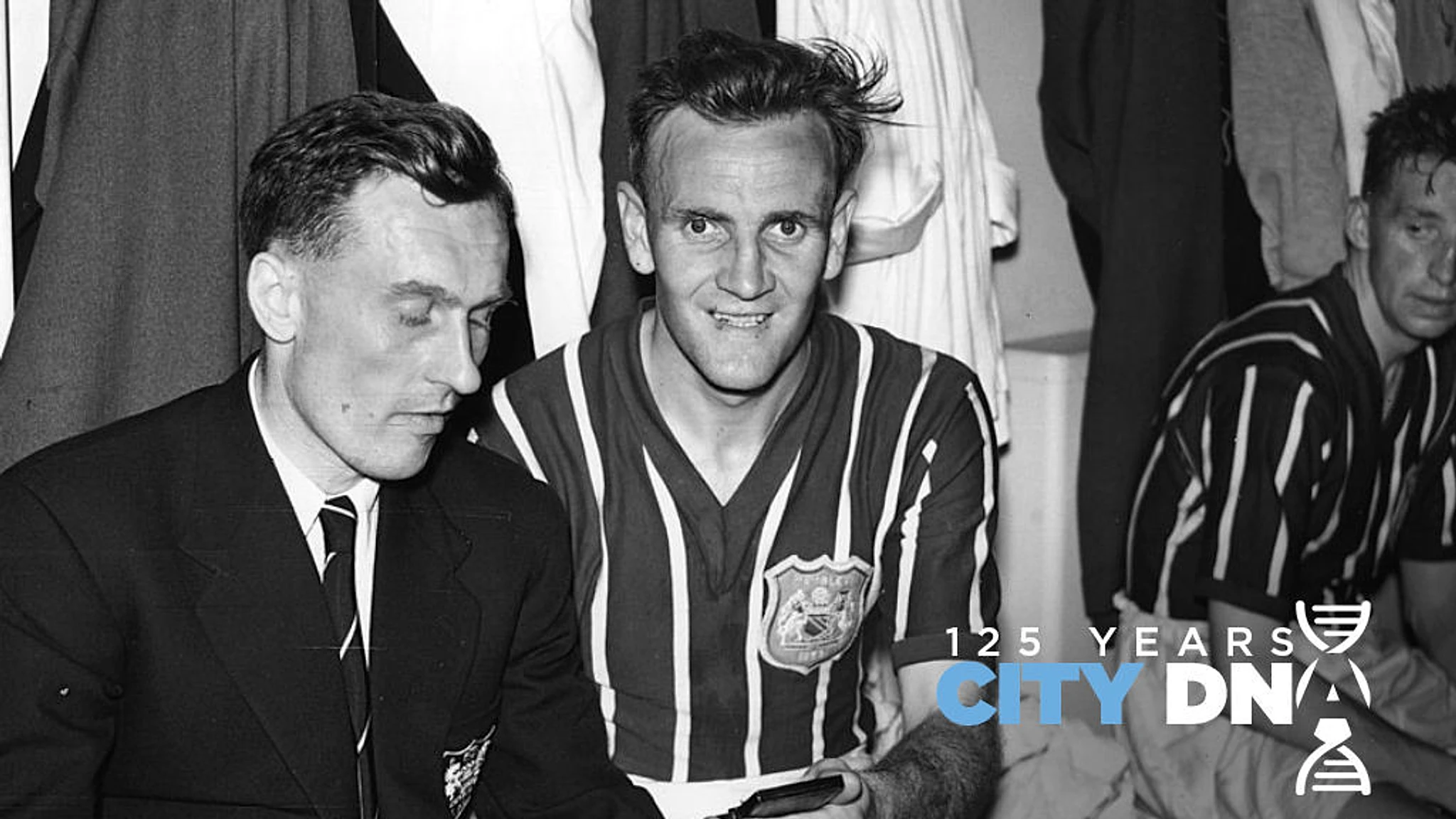
Seventy years on from Manchester City's historic FA Cup final victory in 1956, it's time to revisit one of English football's most compelling characters: Don Revie. Known to many as the mastermind behind Leeds United's golden era, Revie's story begins in sky blue, where he first made his mark as a player with a revolutionary vision.
For City fans who remember the glory days at Maine Road, Revie is more than just a name in the record books. His 41 goals in 178 appearances tell only part of the tale. What truly set him apart was a tactical innovation so distinctive it earned its own name—the "Revie Plan." This forward-thinking approach to the game helped propel City to Wembley glory and left an indelible mark on British football.
Born in Yorkshire with a reputation for straight talk, Revie's playing career at City from 1951 to 1956 showcased his brilliance as a deep-lying centre-forward. His intelligence on the pitch and ability to orchestrate play from deep positions made him a nightmare for defenders and a joy for teammates. It was this period that laid the foundation for his later success as a manager.
Of course, Revie's legacy extends far beyond his playing days. As Leeds United manager during the 1960s and early 1970s, he transformed a struggling side into European giants, winning eight major trophies in 14 years. His fierce rivalry with Brian Clough—who would later succeed him at Leeds—became the stuff of football folklore.
Yet Revie's story isn't without controversy. His tenure as England manager from 1974 to 1977 saw the Three Lions fail to qualify for both the European Championships and the World Cup. When he left the role for a lucrative opportunity in the United Arab Emirates, some fans never forgave him. But to judge him solely on that chapter would be to overlook his visionary contributions to the game.
As we celebrate 70 years since that unforgettable FA Cup triumph, it's worth remembering that Don Revie was more than a manager or a player—he was a man with a plan, and that plan changed football forever.