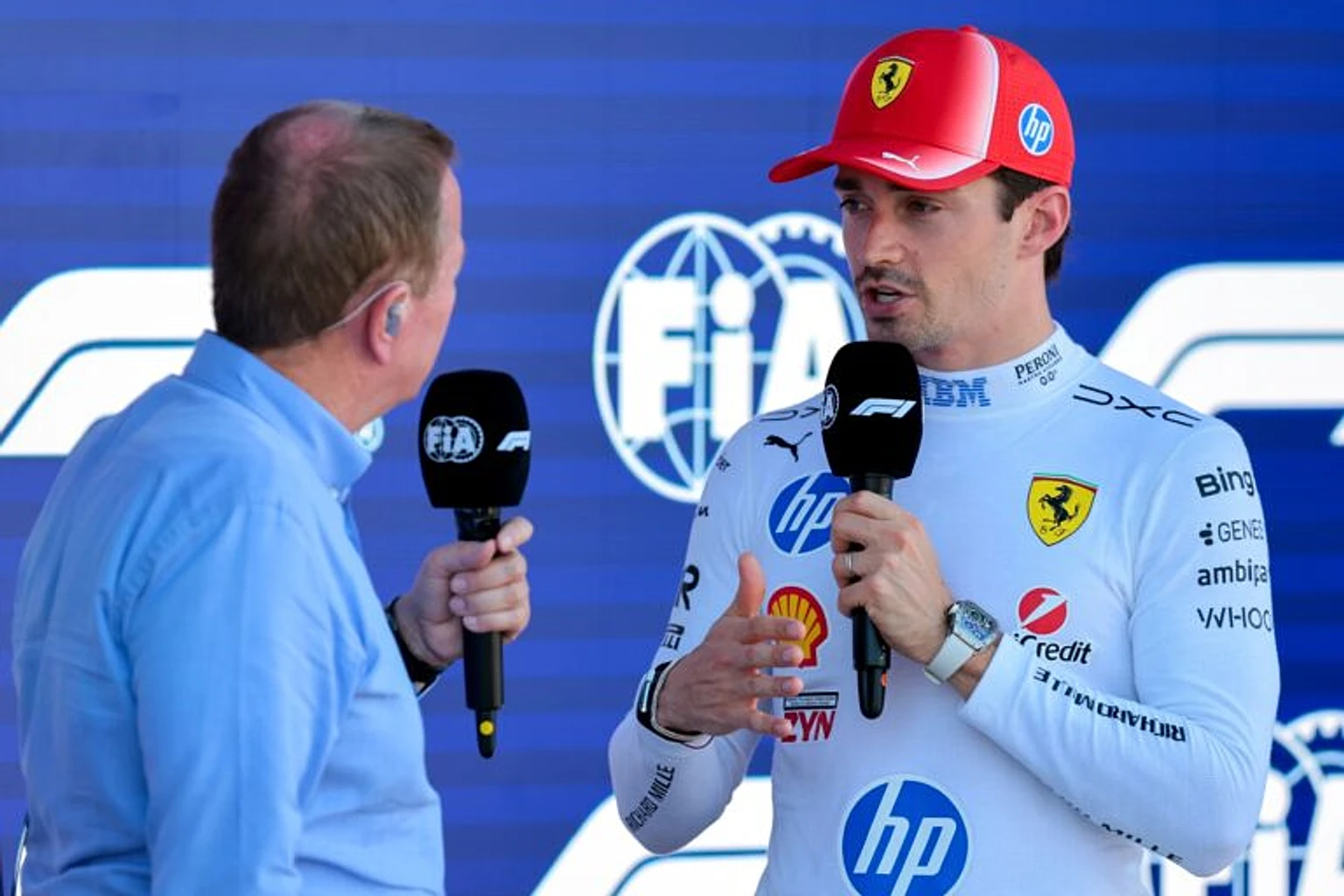
Ferrari rolled into Miami with more new parts than any other team on the grid, but they left with more questions than answers. The Scuderia brought a whopping eleven updates to the SF-26, yet a sixth and seventh-place finish (before time penalties) hardly reflects the promise the car showed earlier in the weekend.
The issue, according to Charles Leclerc, wasn't the upgrade package itself—it was how the car's tires behaved once the race got serious. After a bright start in Miami, the weekend turned into a frustrating Sunday, with the Red car unable to match its sprint and qualifying pace.
"With the mediums, we weren't performing well. We had a lot of degradation," Leclerc admitted after the race. Switching to the harder compound didn't immediately fix things either. "With the hard tires, it wasn't great at the beginning, then the pace improved and it was a little better, but we never got back to the level we were at on Saturday."
That gap between Saturday's speed and Sunday's struggles is what Leclerc is pushing the team to solve. "We need to analyze this. We've lost a lot of performance since then, and I'd like to understand exactly what happened."
The fact that this happened despite Ferrari's substantial development batch makes it a tough pill to swallow. Still, Leclerc insists the upgrades worked as intended—meaning the team needs to look elsewhere for the root cause. "The package of improvements works, but the problem is that others are also pushing, and probably their package was a little better," he said.
McLaren, for instance, made the most of its own upgrades, becoming the first team to beat Mercedes to a checkered flag this season with a sprint race win. Meanwhile, Kimi Antonelli took the Grand Prix victory for Mercedes—an ominous sign, given the Silver Arrows deliberately held back their major upgrade package until Canada.
For Ferrari, the Miami weekend was a reminder that even the most aggressive development cycle can't guarantee results if tire management and race-day execution don't follow. As Leclerc put it, the team has work to do—and the clock is ticking.