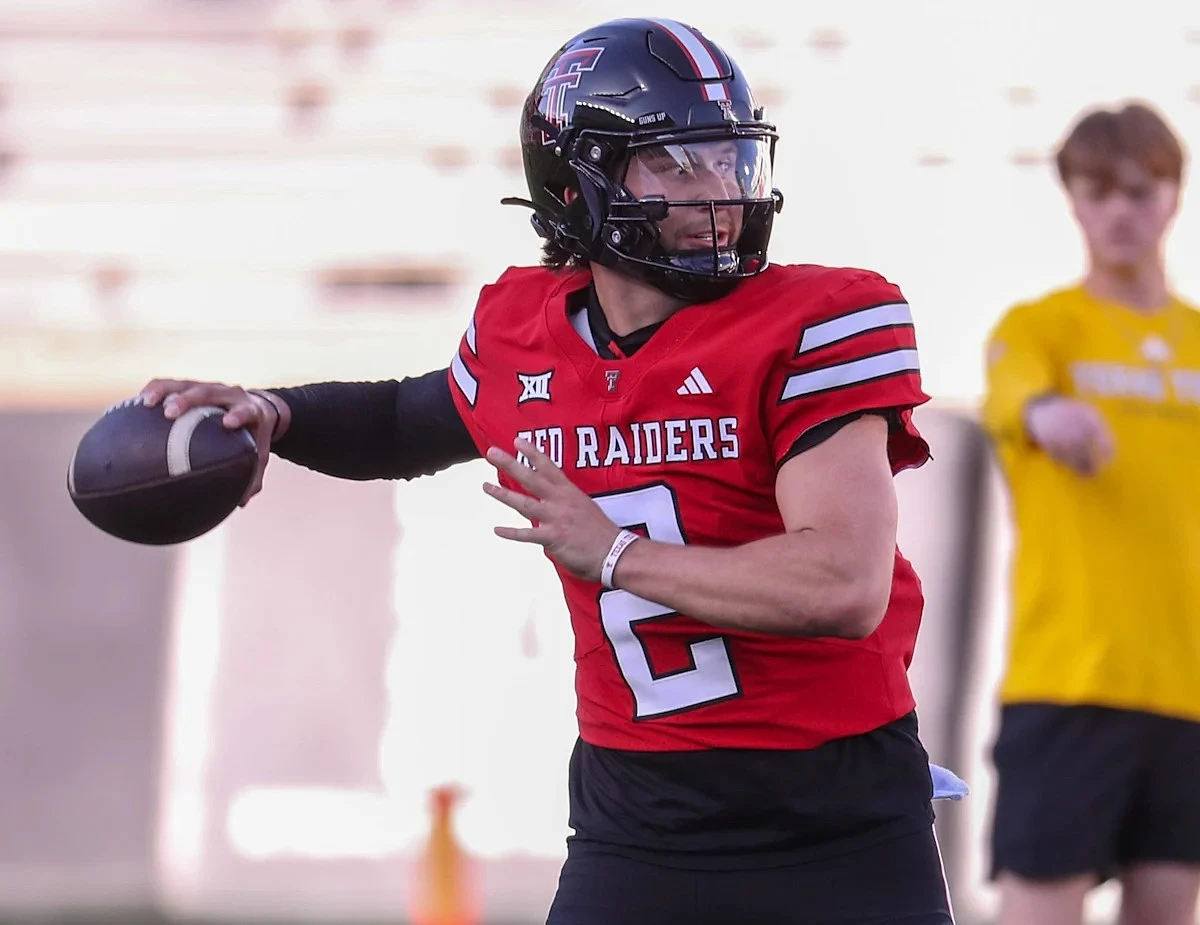


We, as a society, put Brendan Sorsby in harm’s way, no different than if we’d dropped a pile of coke in front of the Texas Tech quarterback and said, "Give it a try. No big deal."
We put phones in our kids’ pockets and backpacks to help keep them safe and now it’s easier for them to gamble than check out a library book. We’ve bombarded them with the message that gambling is harmless since before they knew what betting was.
We’ve obliterated that once-bright line between leagues and teams and the gaming industry, making them think that sports betting is all part of the fun. We’ve normalized an addictive behavior when their brains and impulse control are still developing.
We, the adults who are supposed to know better, let this happen. Signed off on it, even. And now that Sorsby and so many other young people like him are getting in too deep, we’re surprised or unsympathetic?
“Modern (gambling) is so much faster, more immersive, more accessible and more psychologically powerful. The fact somebody can bet on every single pitch in a baseball game, becomes so psychologically powerful," said Matt Missar, a licensed clinical social institute at The Better Institute who specializes in treating the impact of sports betting on youths and young adults. "Then you pair that up with brain development at that age, the reward sensitivity and sensation-seeking is at all-time high while the cognitive control part of their brain is still being developed.
“An analogy is to a car. Adolescent brains have crazy gas pedals and a revving engine, and the brakes still being put together, still being wired,” Missar added. “They’ve got incredible reward-seeking behavior, but the part telling them they should weigh out the long-term consequences, that voice is quiet.”
Dive deeper: Inside the high-stakes, high-risk world of sports betting and how it's gripping young men
Texas Tech announced April 27 that Sorsby, who was the top player in the transfer portal after spending the last two seasons at Cincinnati, was entering treatment for a gambling addiction. The NCAA is also investigating the 22-year-old for reportedly making "thousands" of online bets during his career, according to ESPN.
That would be the same NCAA that was totally cool with letting college athletes bet on professional sports for about six weeks last fall. The same NCAA that put the men’s Final Four in Las Vegas in 2028. The same NCAA that waited until mid-January to ask federal regulators to suspend the college sports prediction markets that have been sprouting up like mushrooms after a rainstorm.
The NCAA is not unique in its hypocrisy. The NFL, the NBA, MLB and every other big-time sport in the United States are more than happy to take the gaming industry’s money but refuse to take responsibility for the harm they’re causing.
“Almost every major sports league is in bed with some gambling company, or multiple gambling companies, so there’s just so much money pouring in,” Missar said.
When the U.S. was still holding the line on legalized gambling, it was ubiquitous in the United Kingdom. Sports betting, especially. Ads for sports books are on the ribbon boards lining the field at Premier League games, making them impossible to ignore for those watching on TV. Gaming companies spent boatloads of cash on front-of-jersey sponsorships.
Sure enough, the number of people with gambling addictions climbed. That included young people, with the number of 11- to 17-year-olds showing signs of problem gambling more than doubling between 2023 and 2024.
But while the United Kingdom has begun trying to claw back the harms — front-of-shirt sponsorships by gaming companies are banned beginning with the 2026-27 EPL season — the United States is determined to make the same mistakes. Only on a larger scale.
After the Supreme Court effectively legalized sports betting in 2018, the league commissioners and team owners who’d once been so concerned about all the dangers gambling could bring — addiction, crime, threats to players — wasted little time in saying, “Screw it. Gimme the cash.”
There are NFL, NHL and WNBA teams in Las Vegas, and MLB and the NBA aren’t far behind. The NBA’s website includes links to its gaming partners. Ads for gaming companies, some of which feature star athletes, are on heavy rotation on any game broadcast.
There are sports books inside stadiums now, for heaven’s sake.
A day after Texas Tech announced Sorsby was entering treatment, former NBA player and assistant coach Damon Jones pled guilty to federal charges related to an illegal gambling ring. Problem gambling is now a fixture of our sports, not a bug, and it is going to take down more and more young people like Sorsby.
A 2025 survey by Common Sense Media found 36% of boys ages 11 to 17 had gambled in the past year. Of that number, 34% engaged in sports-related gambling.
“It will get worse if we don’t address it,” Missar cautioned.