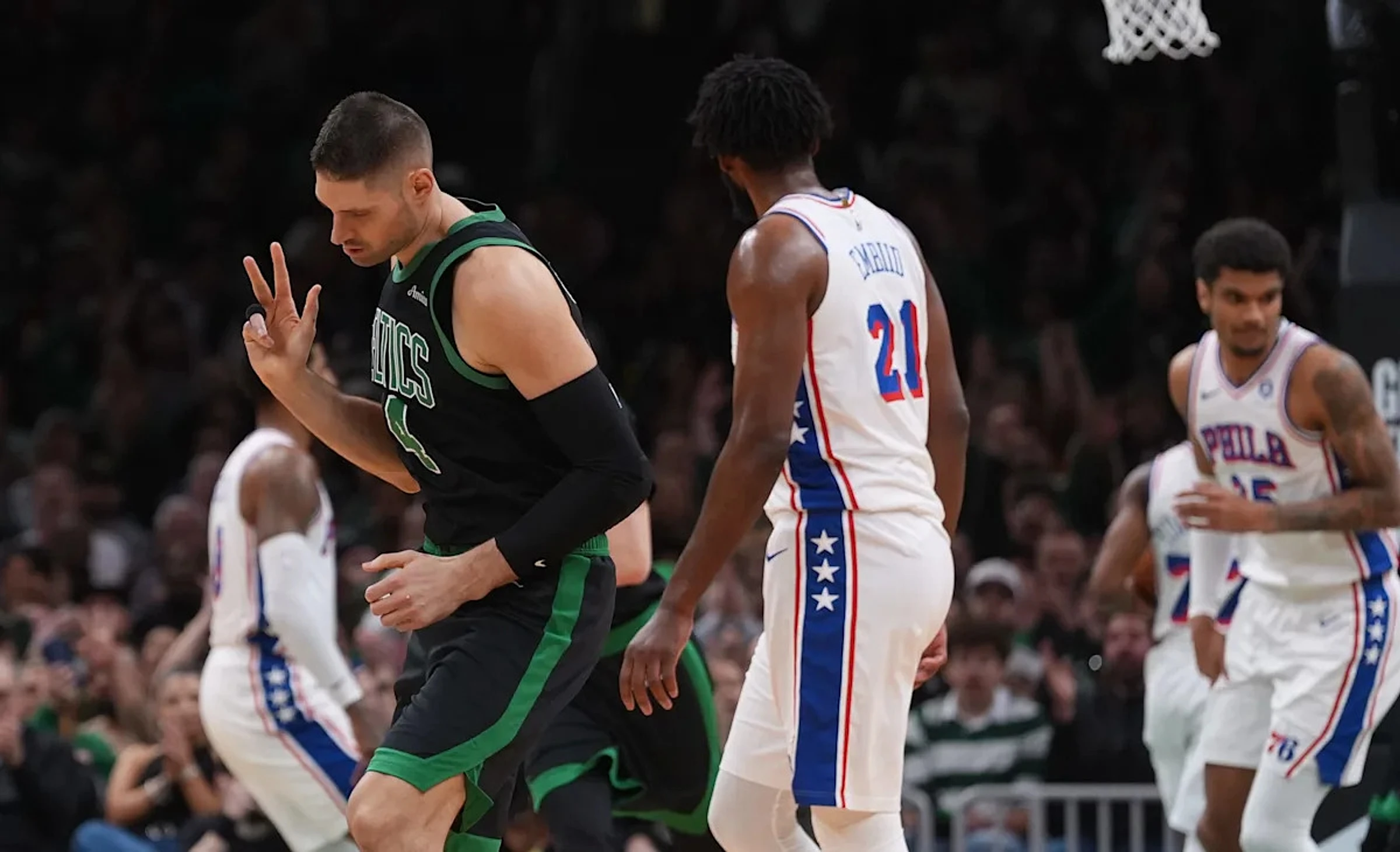
BOSTON — In a candid exit interview that cut through the usual postseason platitudes, Boston Celtics President of Basketball Operations Brad Stevens didn't mince words about his team's stunning first-round collapse against the Philadelphia 76ers. Speaking at the Auerbach Center, Stevens addressed the elephant in the room: how a team that held a commanding 3-1 series lead could fumble away a playoff series and leave fans searching for answers.
"One of the things that we've got to figure out is how to have more of an impact at the rim," Stevens said, acknowledging a glaring weakness that haunted the Celtics throughout the series. "I think we do need to add to our team to do that. Everybody plays a role in that."
The numbers back him up. Boston's offense, typically a well-oiled machine, sputtered against a Sixers defense anchored by Joel Embiid. The reigning MVP planted himself near the hoop like a tree with deep roots, daring the Celtics to challenge him at the rim. In Game 7, that strategy paid off in spades—Boston simply couldn't find a way to consistently score in the paint.
"I think for whatever reason, we slowed down," Stevens reflected on the team's multiple postseason exits as a favorite. "You really have to play great to get what you want. And if you take your foot off the gas at any point, it's going to come back to bite you."
Nowhere was that more apparent than in the Celtics' big man rotation. Neemias Queta, who started every playoff game except Game 7, found himself shackled by foul trouble. The promising center would pick up two quick fouls in the matter of minutes, forcing Stevens to yank him from the floor before he could establish any rhythm.
"To be honest, one of the things with Neemi was just figuring out how to keep him on the floor," Stevens told Celtics Wire. "Because he had two games where he's off the floor in four minutes."
For a team that prides itself on versatility and depth, Boston's inability to get reliable production from its bigs was a critical flaw. The Celtics need more than just a presence in the paint—they need someone who can stay on the court, challenge shots, and provide that interior scoring punch that was sorely missing against Philadelphia's towering defense.
As the Celtics turn the page on a season that ended far too early, Stevens made it clear: changes are coming. Whether that means tweaking the rotation, adding a veteran presence, or investing in development, Boston knows that in the modern NBA, you can't win without winning the battle in the paint. And for a team with championship aspirations, that's a lesson they can't afford to learn the hard way again.