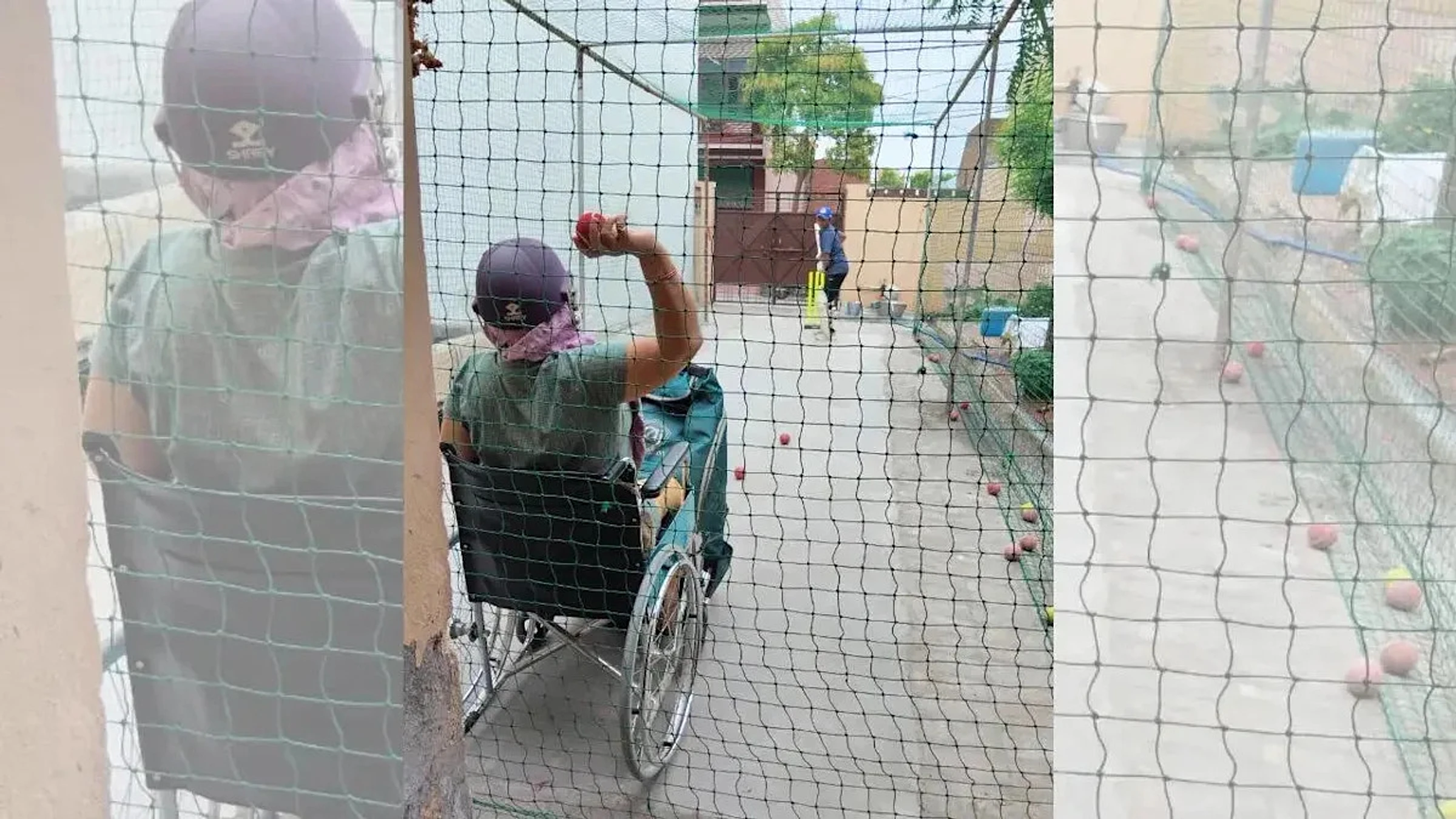
In the narrow lanes of Saharanpur, far from the roar of packed stadiums and the flash of cameras, a different kind of cricketing story is unfolding—one built not on privilege, but on sheer will and an unbreakable bond between a mother and her son.
While teenage prodigies dominate headlines with their boundary-hitting exploits, 16-year-old Arnav is quietly crafting his own journey. The odds were stacked against him from the start: his father is recovering from paralysis, and his family's financial situation is precarious. Yet, inside their modest home in Punjabi Bagh, a narrow corridor has been transformed into a makeshift cricket net. And at one end, seated in a wheelchair, is his mother, Kusum Lata—his first coach, his bowling partner, and his unwavering support system.
"I had a passion for cricket since childhood, but my family's financial condition was unfavourable. But my obsession with cricket never let me stop," Arnav shared. His father once ran a small dairy business, but illness forced it to shut. His elder brother sacrificed his own cricketing dreams to take up a job and fund Arnav's cricketing expenses.
With limited resources and no access to structured training, Kusum stepped up in the most remarkable way. Every day, she bowls to Arnav from her wheelchair—not out of convenience, but out of pure commitment. "When my child tells me to bowl in a certain way, I watch matches to improve myself. I try to learn variations and maintain a good length so that his practice improves," she said. She studies bowlers on television and mobile screens, absorbing techniques and applying them in their home sessions. "When I saw his dedication, I thought I should also do something so that he can move forward."
Arnav draws inspiration from cricketing icons like Virat Kohli and Rohit Sharma, whose posters adorn his walls. "I want to play like them. I like their shots very much," he says. His story is a powerful reminder that the heart of cricket beats not just in stadiums, but in the quiet determination of a mother bowling to her son, one delivery at a time. It's a partnership that proves the greatest support system isn't always on the field—it's at home.