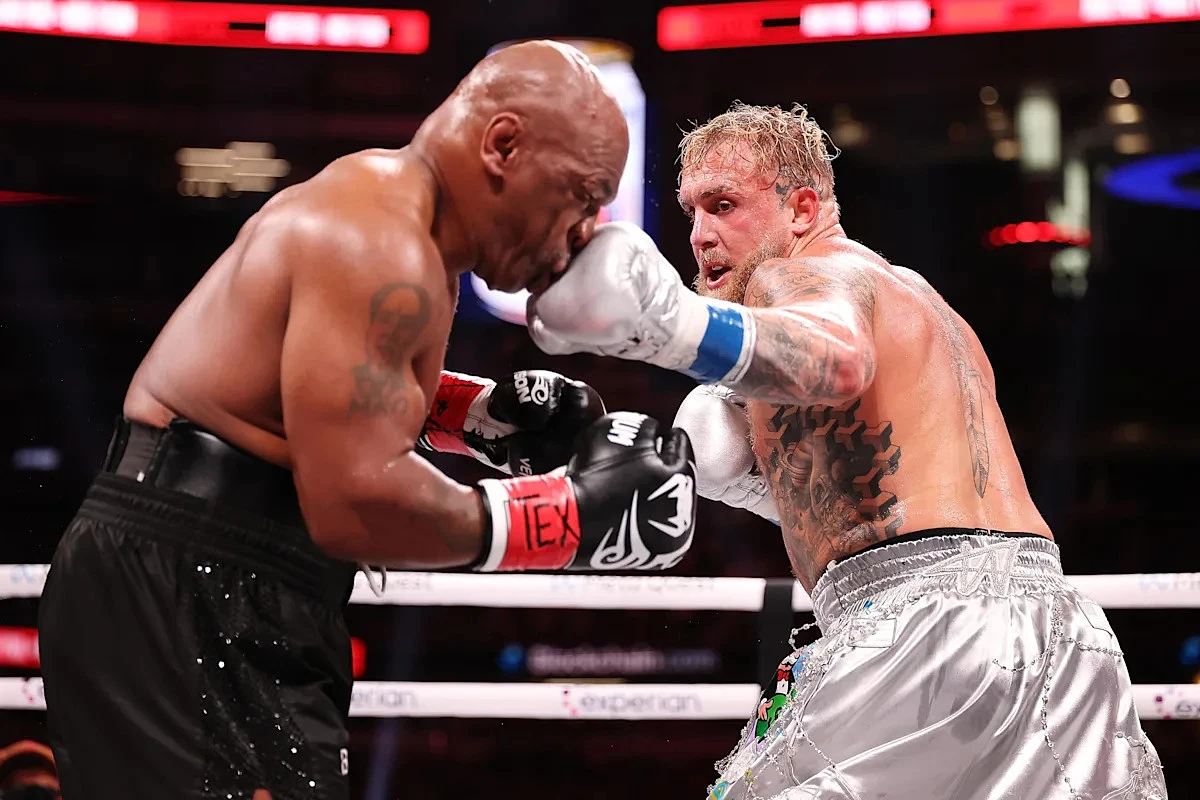
In the world of combat sports, the numbers you see on a fighter's contract don't always tell the full story—and the upcoming Jake Paul vs. Mike Tyson bout is the latest example.
An auction house called Goldin is currently offering a signed copy of the contestant contract from the Texas Department of Licensing and Regulation for the highly anticipated Netflix fight between Jake Paul and Mike Tyson. While the event generated massive buzz and record-breaking viewership, the actual in-ring action left many fans underwhelmed. In hindsight, that outcome seems almost predictable: a YouTube star-turned-boxer facing off against a 58-year-old Tyson was always going to be more spectacle than sport.
Die-hard "Iron Mike" fans might take solace in the idea that Tyson got paid handsomely, but according to the contract, both fighters are listed at just $2 million each. That's a far cry from the initial reports that had Paul earning around $40 million and Tyson pocketing $20 million. And even those estimates likely undersell the financial success of the event—the gate alone pulled in over 59,000 fans, generating $18.1 million in ticket sales.
So why the discrepancy? The answer lies in the fine print. While gate figures are required to be disclosed to combat sports commissions, fighter pay reported on bout agreements is often just the tip of the iceberg. Most of the big money is hidden behind separate business contracts—sponsorships, pay-per-view shares, and other revenue streams—that never see the light of day. As one industry insider put it, "These numbers are bunk."
As for the contract itself, it's currently sitting at $2,500 with no bids. But for fight fans and collectors alike, it's a fascinating glimpse into the opaque world of professional boxing—and a reminder that when it comes to fighter pay, what you see isn't always what you get.