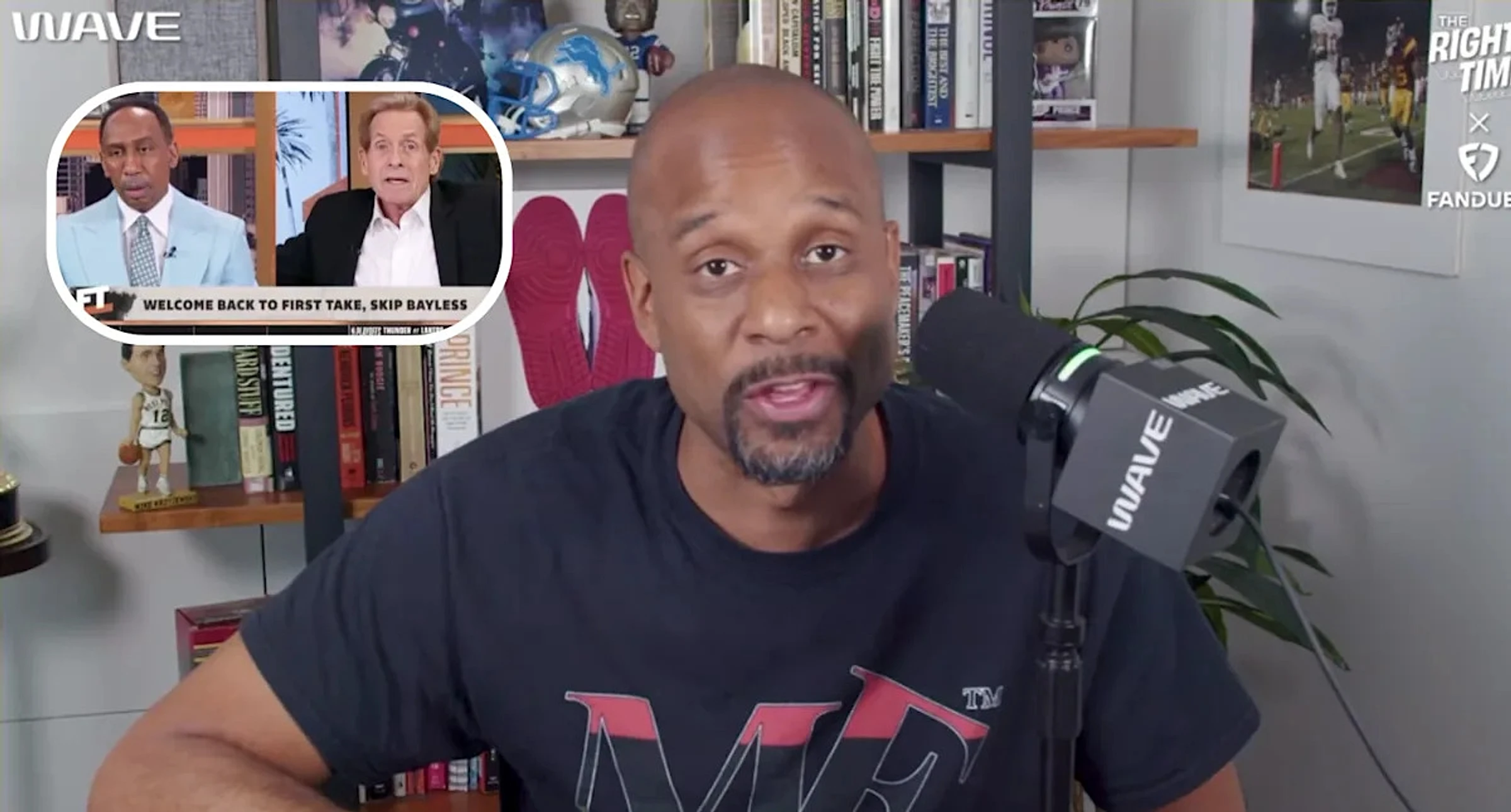
As First Take has soared to become the biggest show on sports television, its outspoken host Stephen A. Smith and the show's high-energy format have drawn intense criticism from all corners of the industry. Many critics point to First Take as a key reason sports talk television has declined in quality over the years. When Skip Bayless made a surprise return to the show last week, the backlash reached a fever pitch once again.
In truth, the reunion between Smith and Bayless felt more like a nostalgic greatest-hits tour than the explosive, debate-driven energy that first made the show a phenomenon over a decade ago. Still, seeing the duo back together gave fans and media pundits plenty of reason to pile on the show and its hosts—just like the good old days.
But former ESPN personality Bomani Jones offered a fresh perspective on the backlash, defending not only First Take but also its loyal audience. Jones argues that much of the criticism directed at the show often crosses the line into criticism of its viewers—everyday people tuning in during the day, and in this case, a large segment of Black viewers.
“I have always felt about the class of people who critique sports media, when they talk about First Take, that First Take is an easy scapegoat for them,” Jones explained on his podcast. “Daytime programming at ESPN has always had a huge Black audience. I bring that up to say, generally speaking, white people don’t really know what to say when they watch something, and they get a signal that it ain’t for them. Black people typically keep on watching. But a lot of those criticisms of First Take, I have always heard in a way and have felt to a degree like they were also, a wee bit, criticisms of the audience. Whether people intended for it to be that way or not.”
While Jones acknowledges that First Take has “earned” plenty of its criticism, he insists that the show's success and Smith's polarizing style reflect a broader cultural divide in sports media. For fans of the show, the debate is about more than just hot takes—it's about representation, audience identity, and what it means to be a sports fan in today's fragmented media landscape.