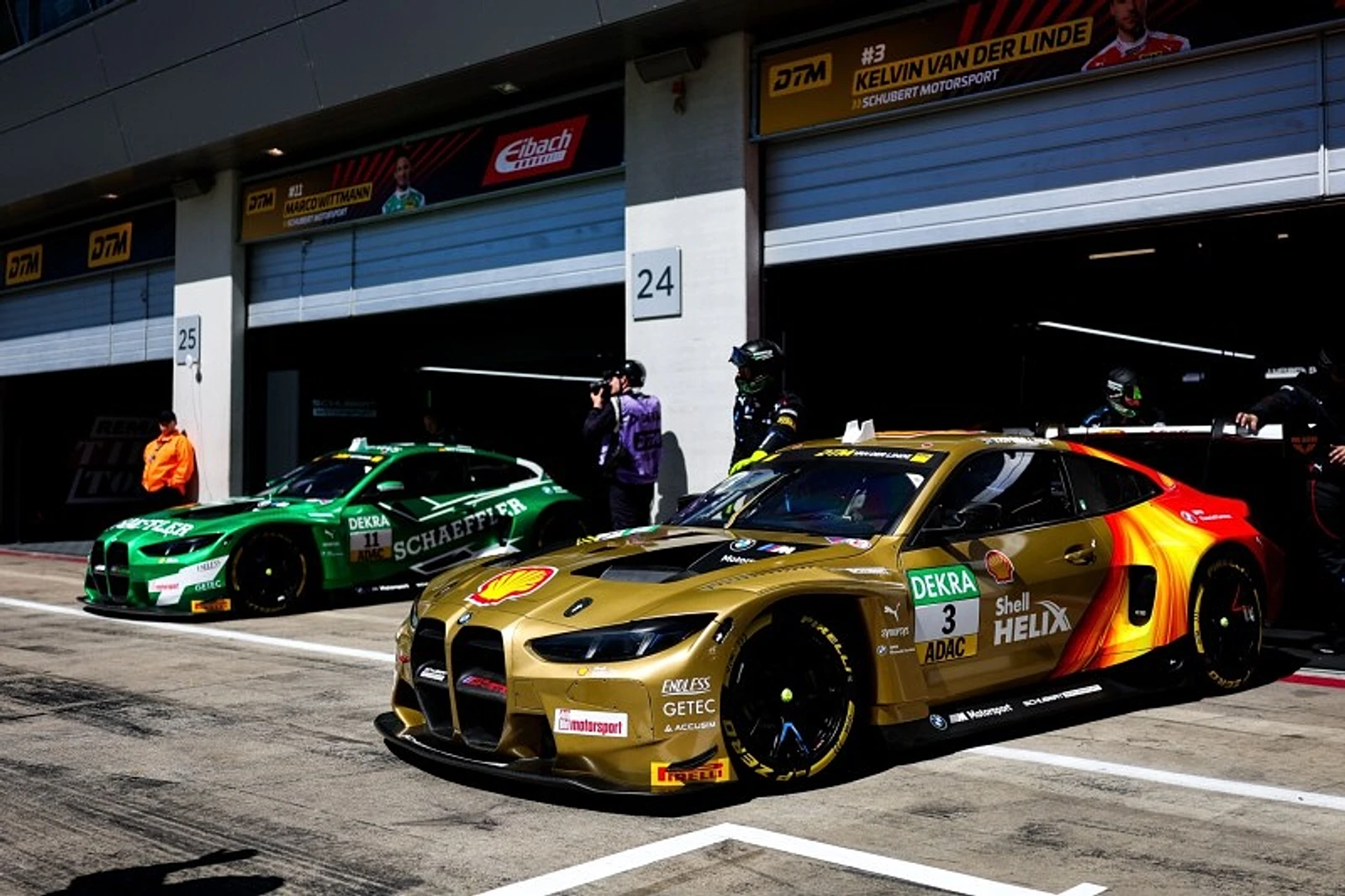
When you look at the 2026 Balance of Performance (BoP) figures for the BMW M4 GT3 Evo in the DTM or at the Nürburgring 24 Hours, one thing jumps out: the boost pressure has taken a noticeable dip. That might raise eyebrows, but here's what's really going on—BMW quietly swapped in a new turbocharger over the winter, and the change required a late FIA homologation. The big question: was this move truly voluntary, or was there more to the story?
BMW Motorsport Director Andreas Roos sat down with Motorsport-Total.com to clear the air. "The introduction was actually planned for 2025," he explained. "But because the development time was too long—and also due to the application side of things—we eventually agreed with the FIA and the organizers to delay the introduction until 2026." So, while the timeline slipped, the change was always on the cards.
Technically, the new turbocharger made its debut in the M4 GT3 Evo as early as late November 2025 at the GT World Cup in Macau. However, the Bathurst 12 Hour in February 2026 was still run with the old unit, because the SRO Motorsports Group—which handles the BoP there—didn't hold its traditional BoP test until after that event. That staggered rollout explains why some races have seen different performance figures.
So, why the swap? Roos framed it as a straightforward cost-saving move: "The main reason was to drive costs down, because it is now a 1:1 series-production turbocharger, exactly as it is installed in the M3 or M4." He called it a "cost-down measure," pointing out that using a stock production part from the road cars simplifies supply chains and reduces development overhead. That's a smart play for any racing program—especially in GT3, where controlling expenses is a constant battle.
There's also an efficiency angle. Roos noted that the team paid close attention to alternative fuels, since their renewable components can sometimes challenge turbocharged engines. "We tried to make the application more robust in that regard," he added. With the racing world increasingly turning to sustainable fuels, this kind of forward-thinking tuning is essential.
As for how the car will feel on track, Roos doesn't expect any dramatic shifts in drivability. "Perhaps a little bit through the application and the fact that the combustion process has been slightly adjusted," he said. While this might offer a "slight advantage" in one area, it could also have a "negative" impact in another. Overall, though, he considers the change "negligible."
Beyond the boost pressure—which is now roughly 0.3 bar lower in some conditions—the new turbocharger also brings a revised Lambda value. For fans and teams alike, the bottom line is that BMW is betting on a smarter, more cost-efficient package without sacrificing the performance that makes the M4 GT3 Evo a contender. Whether that bet pays off will play out on circuits around the world this season.