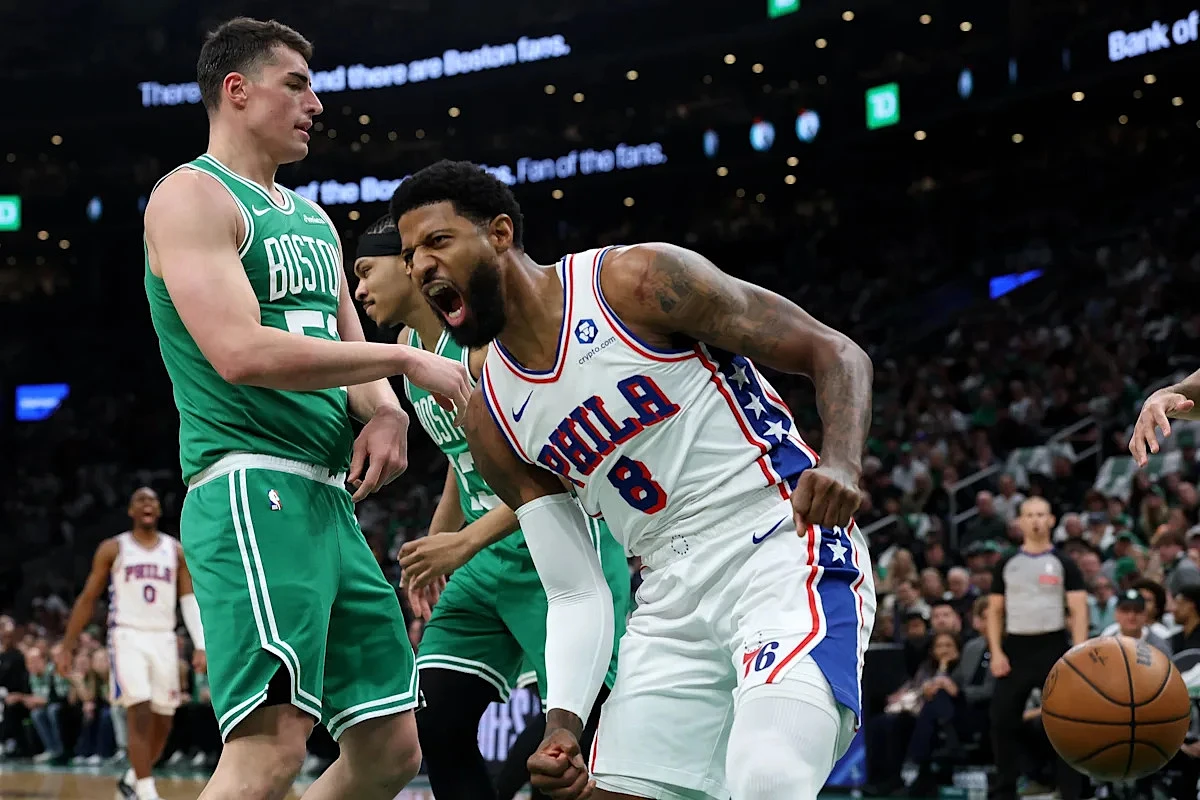
The Boston Celtics are officially out of the postseason after a stunning Game 7 loss to the Philadelphia 76ers at TD Garden. While the final score—109-100—tells a story of defeat, the real narrative goes far beyond missed shots. Let's break down what really went wrong for the Green Team.
It's tempting to point fingers at the Celtics' abysmal 26.5 percent shooting from beyond the arc. After all, those open looks down the stretch seemed promising, but they simply wouldn't fall. However, context matters: Boston actually hit two more three-pointers than the Sixers (13-11) and had previously lost both games in the series when Philadelphia won the three-point battle. So, the shooting narrative alone doesn't tell the full story.
As Celtics guard Payton Pritchard put it in the locker room: "People didn't say that when we had a 3-1 lead. We had good looks, and if we hit them, then nobody says anything. You just got to make them." Fair point. So, let's look beyond the shooting and examine the other cracks in Boston's armor.
The biggest shake-up came just hours before tipoff when star forward Jayson Tatum was ruled out with left knee stiffness, described by coach Joe Mazzulla as "day-to-day." This forced Mazzulla to get creative—or desperate—with his starting lineup. In a move that caught everyone off guard, the Celtics trotted out center Luka Garza, wing Baylor Scheierman, and guard Ron Harper Jr. alongside usual starters Jaylen Brown and Derrick White. It was a lineup the Sixers surely didn't see coming, and for good reason.
The experiment backfired immediately. Boston fell into a 9-0 hole right out of the gate, and the uphill battle only grew steeper from there. The lack of cohesion and rhythm was palpable, and the Celtics never fully recovered. In a game where every possession matters, starting with a makeshift unit against a seasoned Sixers team was a gamble that simply didn't pay off.
For fans and players alike, this loss stings—especially after holding a 3-1 series lead. But as the Celtics head into the offseason, the lessons are clear: depth, adaptability, and execution under pressure are just as crucial as shooting percentages. Sometimes, the story isn't about the shots you miss, but the foundation you build before the ball even leaves your hands.