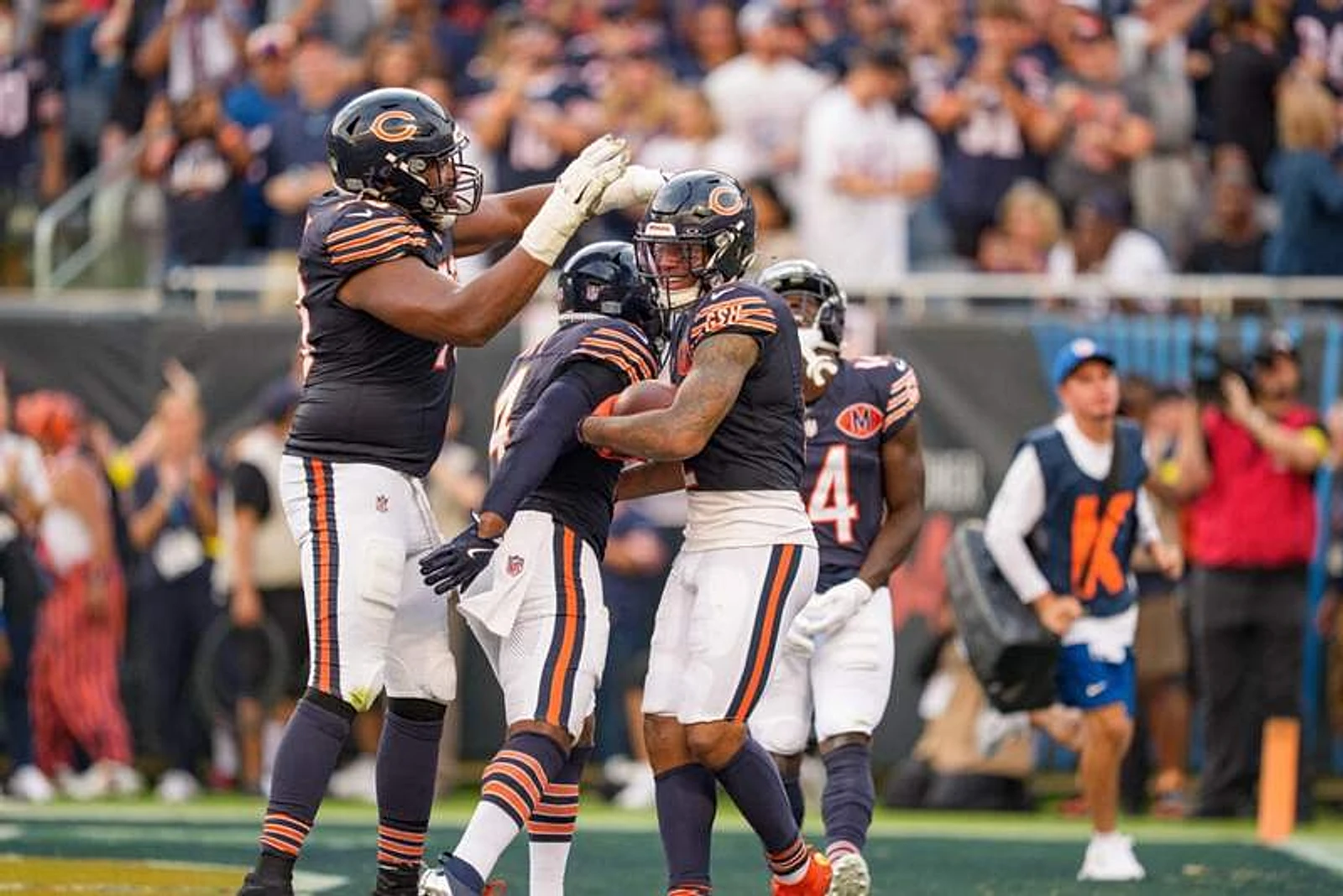


While the Bears have talked a lot about adding competition to the roster, the play on the field hasn’t quite matched up with those intentions. Braxton Jones posted a 55.5 PFF grade in 2025 and ended up losing his spot in the lineup.
Tyrique Stevenson gave up a passer rating of 93.8, and both safeties from last season are now gone. If Chicago uses an early pick at any of those positions, that player isn’t coming in to compete—they’re coming in to start.
Although the team has suggested Jones is still in the mix at left tackle, his 2025 season doesn’t really back that up. He played just over 200 snaps, lost his starting spot early, and had ongoing problems in pass protection. He allowed pressure about once every nine snaps – a rate well below what’s expected from an NFL starter.
Most starting tackles grade somewhere in the mid-60s or higher. Jones didn’t come close to that mark. There’s a difference between a player going through a bad patch and one who simply isn’t up to the job, and Jones fits into the latter category.
If Chicago uses an early pick on a tackle, it will likely be framed as adding competition. But in reality, it would signal a shift. First-round tackles are expected to start early, and there’s enough of a gap between Jones’ play and what those picks usually bring that it wouldn’t take long for changes to happen.
There have been moments in Stevenson’s game that have caught the eye, but the broader picture suggests inconsistency rather than progress. He finished the year with a 93.8 passer rating allowed and a 59.6 coverage grade, both of which placed him in the lower half of starting corners. Those numbers don’t suggest a player who has nailed down his spot.
His playing time also dipped toward the end of the year as his role shifted. When teams believe they’ve found a reliable starter, they typically don’t cut their snaps as the season winds down—they do it when there are still questions to be answered.
If Chicago uses an early draft pick on a corner, Stevenson would find himself competing against someone the club has just invested heavily in. That’s less about adding depth and more about determining who earns the starting job.
Kevin Byard finished last season with seven interceptions and picked up an All-Pro nod. Jaquan Brisker held down the other spot, playing all 17 games. Neither player is back for 2026.
The current group includes players who are either replacement-level or unproven additions without significant starting experience. The position is widely viewed by analysts as one of the Bears’ most pressing needs heading into the draft.
There isn’t much to debate here. Chicago don’t have a clear starter at safety right now—just a collection of options—and they’ll likely need to look to the draft to find their answer.
More than half of first-round picks end up as starters, and that transition tends to happen quickly for positions like left tackle and cornerback. The Bears understand how this plays out.
If Chicago uses a high pick on a left tackle, it’s unlikely he’ll be sitting behind Jones. A rookie corner wouldn’t come in to learn under Stevenson. And any early pick at safety would be expected to play straight away. That’s just how things work when teams address clear needs early in the draft.
The Bears are framing it as competition because that’s what teams do at this time of year. But the performance data, playing time, and roster moves point to something else. The production from Jones, Stevenson, and the current safety group hasn’t been strong enough to hold off new arrivals.
Jets face key decision at No. 2 between Bailey and Reese
Donald Trump said buying Dallas Cowboys was a ‘no win situation’ before they became the most lucrative US franchise
Fernando Mendoza’s one tendency could cause problems for him in NFL, says anonymous NFC executive