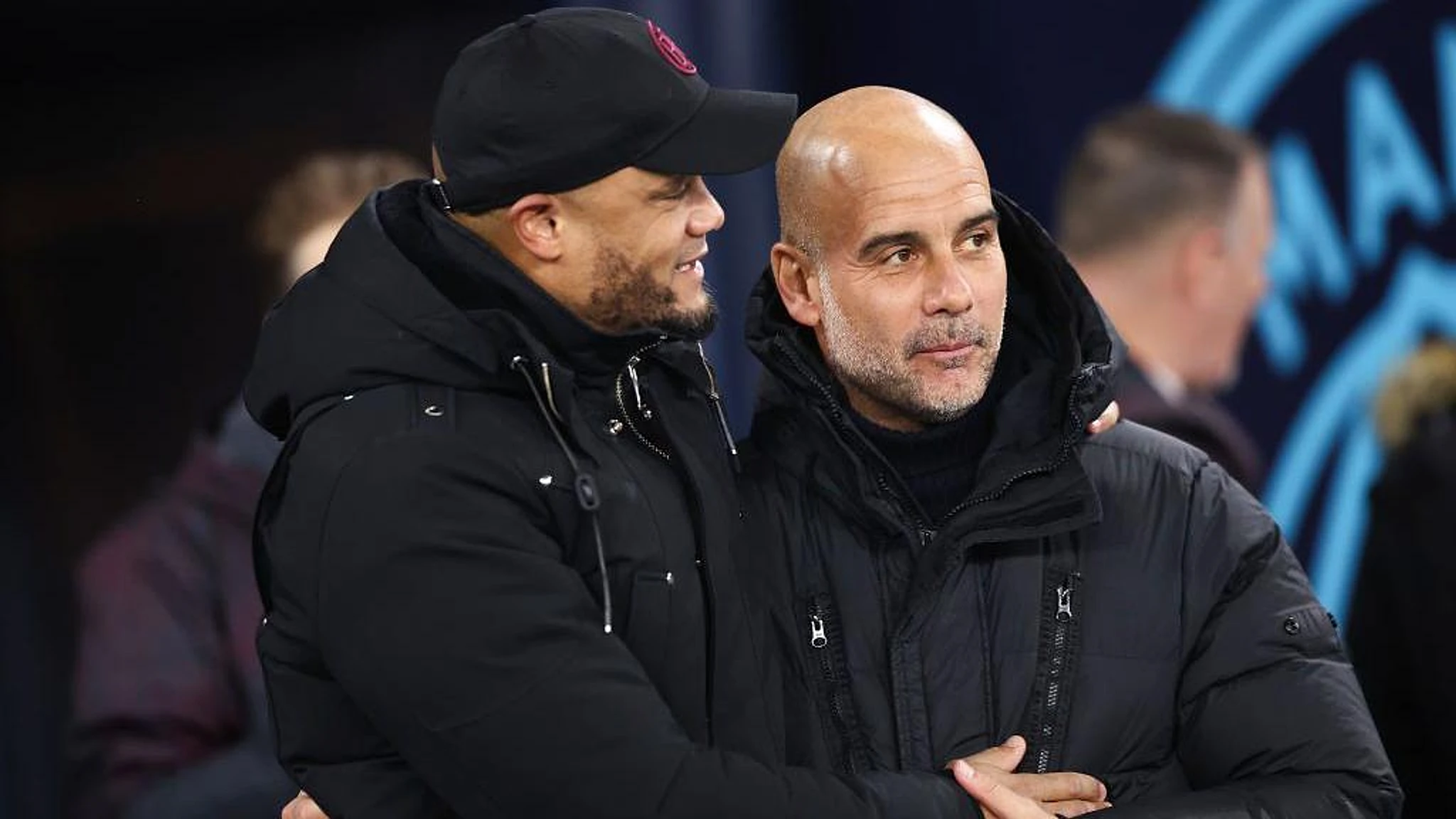
Vincent Kompany's statue outside the Etihad Stadium is a testament to his legendary playing career at Manchester City. Now, as Bayern Munich's manager, he's sculpting a new legacy, one that has the football world wondering if we're witnessing the dawn of a post-Pep Guardiola era.
His appointment last May raised eyebrows, coming on the heels of Burnley's relegation. Yet, it has proven to be a masterstroke. Kompany immediately delivered the Bundesliga title and has Bayern cruising toward another, holding a commanding 12-point lead. More impressively, they head into a crucial Champions League quarter-final second leg against Real Madrid with a 2-1 aggregate advantage.
With Pep Guardiola's long-term future a constant topic of speculation, Kompany's deep City connections make him a natural name in the conversation for that eventual succession. But for now, his focus is on imprinting a thrilling, distinct philosophy at the Allianz Arena.
In an era where top teams can be stifled by aggressive man-marking defenses, Kompany's Bayern do the opposite: they embrace the chaos. They play with a fearless, fluid style that involves all eleven players, building attacks courageously from the back. This isn't cautious possession; it's proactive, entertaining football designed to break defensive structures.
A perfect example came against Atalanta in the Champions League last 16. Facing a relentless man-marking scheme, Kompany's solution was ingenious. He instructed attackers like Serge Gnabry to drop deep into defensive areas, pulling their markers wildly out of position. This created disorganization and vast spaces for teammates to exploit, culminating in a devastating 10-2 aggregate victory. Juventus boss Luciano Spalletti aptly called it "a whole encyclopedia of movement."
This philosophy hinges on relentless, intelligent movement off the ball. In their first leg against Real Madrid, Bayern's defensive line in their 4-2-3-1 shape consistently pushed high and wide, stretching the pitch and creating passing lanes through the heart of Madrid's midfield. It's a demanding, cohesive system where every player's understanding of space is paramount.
Kompany is proving that the next evolution of tactical football might not be about a new formation, but about perfecting motion itself. His work at Bayern is a compelling blueprint—a high-energy, attacking style that could very well define the future of the elite game.