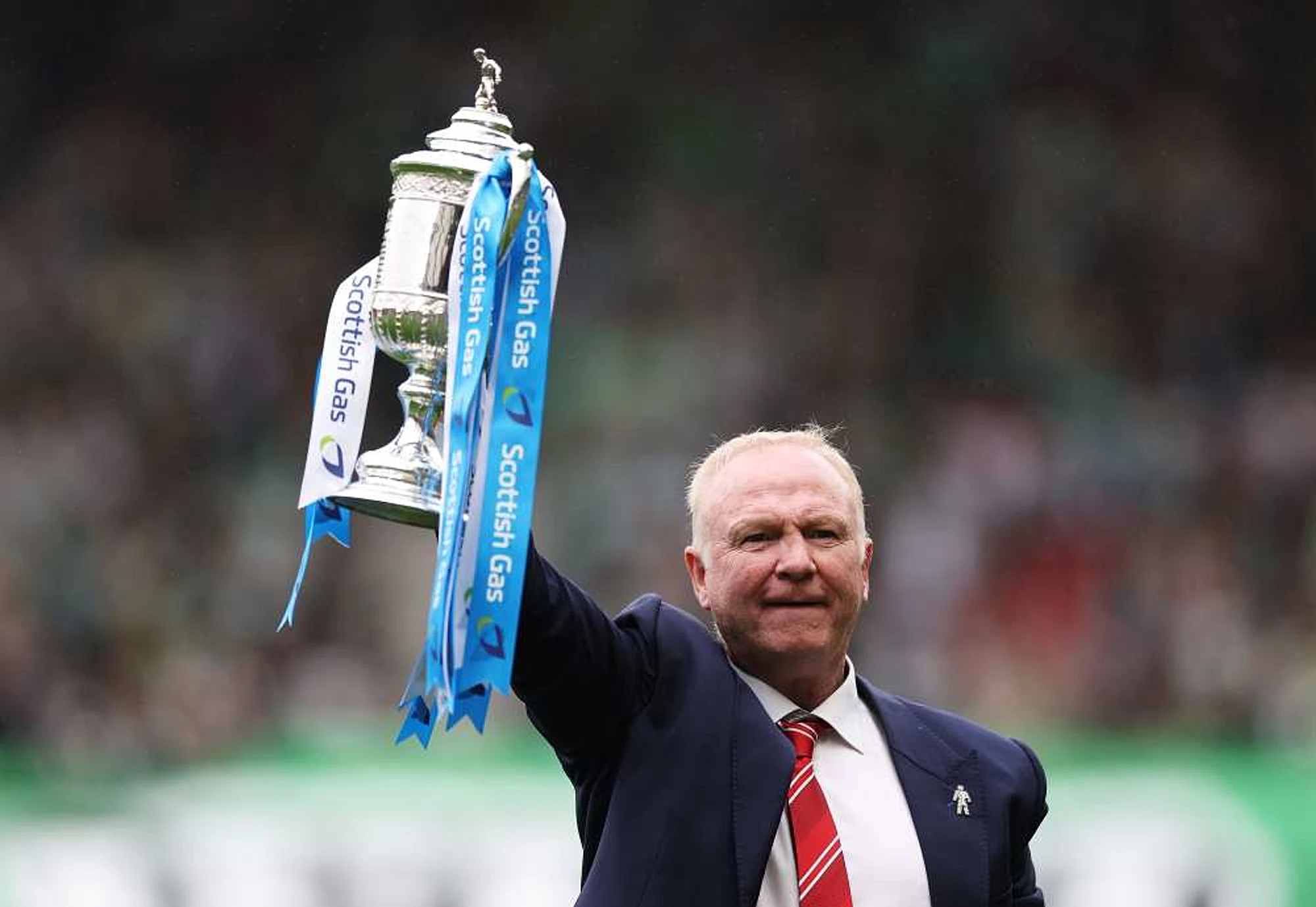

You managed a Scotland select recently at a match hosted at Broadwood Stadium in support of Alzheimer’s Scotland. How pleasing was it to see such a strong turnout and to be involved yourself?
“It was brilliant. When you see over 1,700 people turning out for a charity match, it tells you how much the cause means to people. Alzheimer’s is something that has affected so many families, not just in football but across society.
“In football, we have sadly lost a number of dear friends and well-known figures to the illness, and there is always that conversation about whether aspects of the game, like heading the ball in previous generations, have contributed.
“Days like this are about remembering those people, supporting their families and raising awareness. The more we can do that, the better. It is a tough illness, one that takes a lot away from individuals and their loved ones, so it deserves full backing from everyone involved in the game.”
You were recently pictured at St Mirren vs Aberdeen with your former teammate at Aberdeen, Willie Miller. What are your memories of playing alongside him during that successful Aberdeen era?
“Brilliant memories. Willie was a fantastic leader, a real captain in every sense of the word. He led by example every single day in training and on matchdays, and he set the standards for everyone else.
”When I broke into the Aberdeen team, I was surrounded by top players and big personalities. You had Willie at the back organising everything, and then players like Gordon Strachan, who brought real quality and intelligence to the team.
“At the same time, Scottish football was very competitive. Dundee United under Jim McLean were an outstanding side, and of course, we had Alex Ferguson driving standards at Aberdeen.
“There was a real edge to everything, but that helped us grow. We were not just teammates, we were close friends, and that togetherness was a huge part of why we were successful. We pushed each other every day, and that created a winning mentality throughout the club.“
Looking back at the European Cup Winners’ Cup success, does that achievement become even more special given how football has changed financially?
“Without doubt. As the years go on, you realise just how special that achievement was. At that time, the financial gap between clubs was not nearly as big as it is now. Aberdeen could compete with the bigger sides because the playing field was more level.
“What made it even more impressive was how the team was built. A lot of those players came through the youth system. Boys like Eric Black and Neale Cooper came into the first team at a very young age and developed into top players.
“There was a pathway there, and there was trust from the manager to give young players an opportunity. That is something you do not always see in the same way today.
“Now, finances play such a huge role. The top clubs have resources that others simply cannot match, so for a team like Aberdeen to achieve what we did back then, it would be incredibly difficult in the modern game. That is why it becomes even more special the more time passes.”
Your League Cup win with Birmingham City is often highlighted as one of your greatest managerial achievements. How do you reflect on that now?
“I look back on it with immense pride. When you are managing a club like Birmingham City and you come up against a team like Arsenal in a final, you know the challenge you are facing. They had world-class players all over the pitch, players who could produce moments of magic at any time.
“So for us, it was about preparation, discipline and belief. We worked very hard on our game plan, making sure we were organised defensively and ready to take our chances when they came.
“The players were outstanding on the day. They stuck to the plan, they showed great determination, and when the moments came, we were clinical.
”To deliver that trophy for the supporters meant everything. Those fans had been waiting a long time for success, and to be part of giving them that moment at Wembley is something I will always cherish.”
What does winning at Wembley mean to you, having experienced it both as a player and a manager?