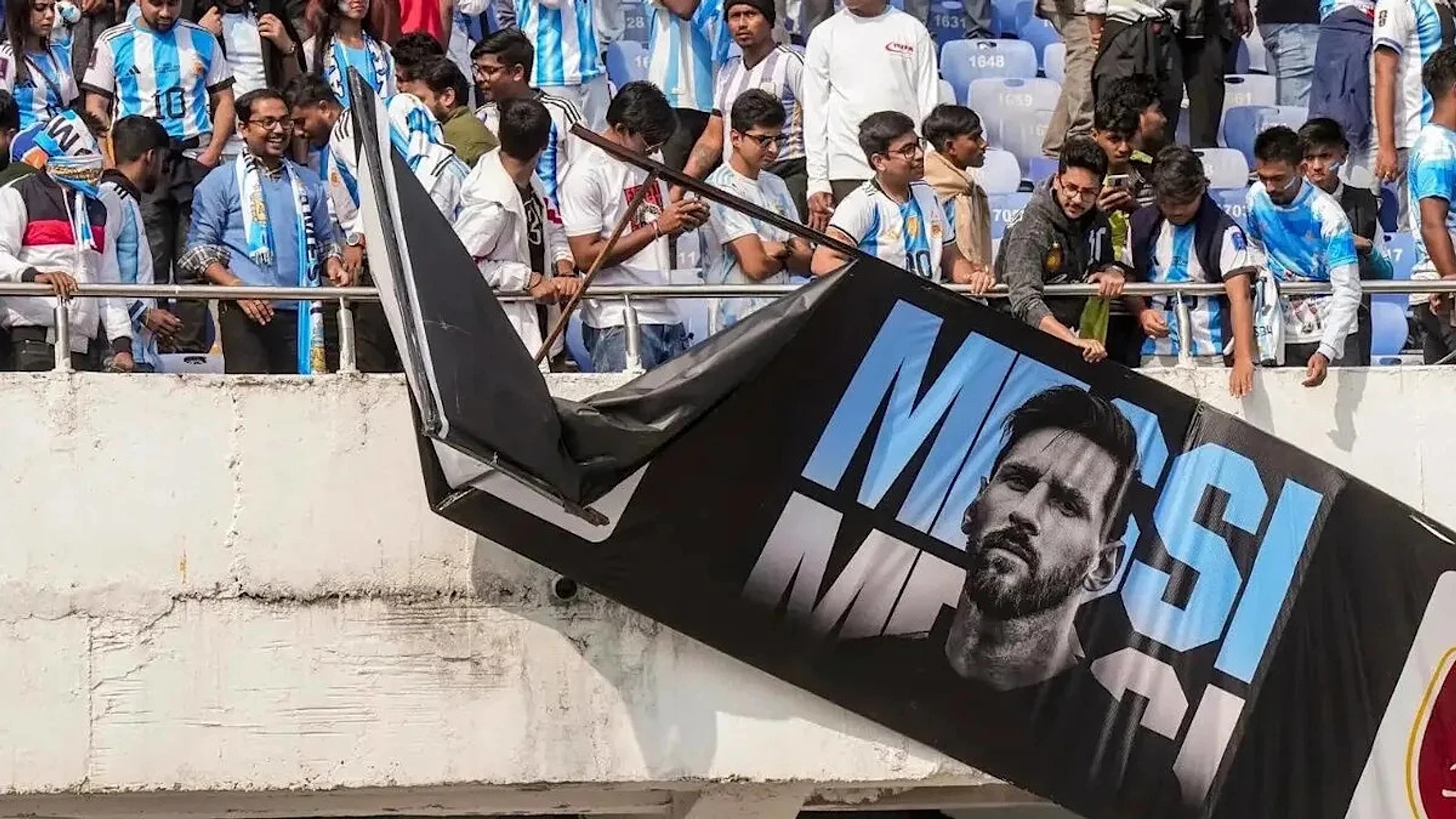
In a shocking turn of events that has sent ripples through the football world, the organizer of Lionel Messi's ill-fated India tour has spoken out about what he calls a "complete security breakdown" at Kolkata's Salt Lake Stadium. Satadru Dutta, the man behind the ambitious project to bring the GOAT to Indian shores, now admits he deeply regrets choosing Kolkata as the venue.
The Argentine superstar's visit turned into a nightmare when he was forced to exit the stadium within just 25 minutes due to chaotic crowd control and serious security lapses. What was supposed to be a historic moment for Indian football quickly became a cautionary tale about event management.
"Absolutely, I regret it," Dutta confessed in an emotional interview. "I could have sold this event elsewhere and made more money. But as a Bengali from Kolkata, I wanted football fans here to experience it. I never imagined that one immature person trying to create his own mileage would destroy the entire event."
The aftermath was brutal. Dutta spent 38 days in police custody and now accuses the Mamata Banerjee-led state government of political interference and blackmail. He claims the event was deliberately sabotaged, pointing fingers at what he describes as a toxic mix of politics and sports.
The security concerns were particularly alarming given the stakes involved. "Messi had close to a billion dollars in insurance coverage," Dutta revealed. "Imagine if something had happened to him on the ground, it would have become a national embarrassment. That's why Messi's team decided they could not continue. He doesn't like claustrophobic situations where people crowd around him."
Despite having completed all required approvals and security protocols, Dutta insists the event was doomed from the start. "This event was a Z and Z-plus category event, and the Home Ministry provided the instructions for that security cover to the Bengal government. Interestingly, even after that, the Chief Minister herself was the chief guest, and she also had Z-plus security. As an event organiser, I completed every approval related to protection, licensing and permissions. We had at least 15 to 20 meetings with police officials. So from my side, all SOPs and protocols were followed. But I was never a law enforcer. I was only the organizer."
The incident serves as a stark reminder that even the biggest names in sports can fall victim to poor planning, and that security must always be the top priority—no matter how many zeros are in the insurance policy.