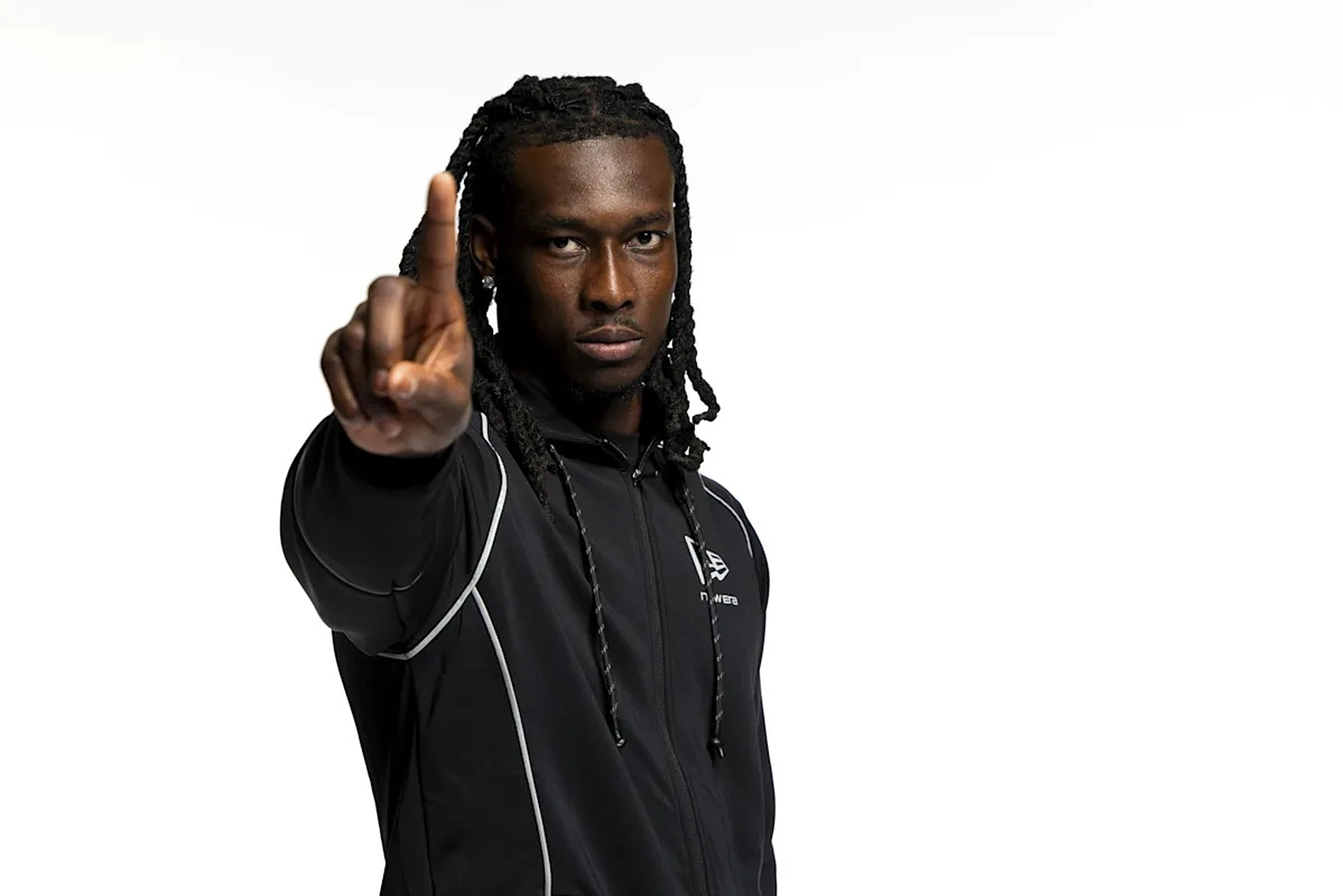


Emmanuel McNeil-Warren, S, ToledoThe Legion of Boom Comes Back to SeattleThe Seattle Seahawks enter the 2026 NFL Draft coming off a Super Bowl victory, their second in franchise history. Their previous ultimate victory, which most probably do remember, was a blowout win over the Denver Broncos in 2014, or Super Bowl XLVIII, 43-8. While the newest win will settle the hearts and minds of Seattle fans for a while, at least until September, there are other things happening within the NFL offseason that require a team’s attention.
Under normal circumstances, teams enter the NFL Draft with an eye focused on the immediate future. Thirty-one teams, in fact, come into the draft with the intention of making a Super Bowl run, themselves. That one lucky team coming off a win in February doesn’t have the luxury of resting, necessarily, but they do have the luxury of some of that pressure to win entering a relaxation period. The burdens levied upon their backs to reach the apex of the sport are lifted. For now.
That said, the 2026 Seahawks come into the draft in a perhaps somewhat rare position. They are returning the vast majority of their championship squad for the next season. As we will see, a lot of personnel is due to come off their books in 2027, which positions this draft for Seattle as a rather important one looking into the short-term future. There are only so many opportunities to replenish the stockpile. While Seattle wasn’t required to do that during the most immediate free agency period, the future of their team, with its empty pages of payroll, beckons.
The most notable concern for Seattle might be a simple lack of draft picks, in total. They have only four picks, one each in rounds one, two, three, and then six. Those picks are numbered 32, 64, 96, and 188, respectively. So few selections will, on its face, hamper Seattle’s ability to plan around their roster needs coming into the not-too-distant future. One might expect, then, that Seattle will have to find alternatives. Those alternatives may mean trading single picks for multiples, or maybe even trading some of the expiring payroll for picks in return.
Stating the obvious, I’m not Seattle’s General Manager, so thankfully, it isn’t my job. What is my job, at least in this particular instance, is finding someone for Seattle to take at #32 that fits their needs, or better yet, is the best player left in the 2026 NFL Draft. If you’re not interested in learning more about Seattle as a team (or are already familiar), you can skip down to the “prospect pool” or “pick” sections and read more about the specific player(s) involved. If you want to hang in for the duration of this thesis, to better assess the Seahawks’ needs, let’s see how Seattle performed during the 2025 season.
Seattle’s offense in 2025 was, by most every measure, a Top-10 offense. They weren’t necessarily the flashiest or most prolific offense in the league, but they were easily above average and balanced enough to handle most situations. Seattle finished 8th in total yards at the end of the campaign. They were 8th in passing yards and 10th in rushing yards. They scored on 45.9% of their offensive drives, which was 6th-best in the NFL. By comparison, since I know many might be curious, the Eagles were 26th at 35%.
The Seahawks also managed the 3rd-most points in the league, behind only Los Angeles (Rams) and New England, their Super Bowl opponent (with their Charmin-soft schedule). Seattle generally did this with remarkable efficiency, as they were a mediocre 21st in total offensive plays but led the league in points-per-play. What really made their offense pop, though, was complementary football from the defense, as Seattle led the NFL in point differential at +191 through the regular season. Combined with wins in the playoffs, Seattle had a league-best +12.3 average scoring margin, almost +4 better than the next closest team (the Rams and the Patriots). The Seahawks also led the league in total DVOA at 41.2%, with the offense ranking 10th (8.5%) and the defense ranking 1st (-24.2%).
It wasn’t all “rainbows and sunshine” with the offense, however. There are places where Seattle can legitimately improve. One of the big sticking points was the turnover department, as the Seahawks’ twenty-eight (28) offensive turnovers was 2nd in the NFL. That included leading the league in fumbles lost with thirteen (13). The main culprit was, unfortunately, Sam Darnold. While his overall redemption story is captivating, he was beyond sloppy with the ball in 2025. He threw fourteen (14) interceptions and had eleven (11) fumbles, six (6) of which he lost.
Seattle also struggled in a couple other key areas: 3rd-down conversions and in the red zone. They were a rather pedestrian 16th on third downs at 39.6%, and their red zone TD scoring was good enough for 22nd in the NFL. The offense was quite efficient through the air with an EPA per pass of 0.11 (ranking 8th), but they were markedly less efficient on the ground, as their 4.1 yards-per-carry was tied for 24th (by comparison, they were second in net yards-per-attempt and first in yards-per-completion). Seattle’s marginal efficiency, overall, settled in at 15th in terms of Total EPA and EPA per play (0.02). It was mostly pulled down by said inefficient rushing attack that was ranked 29th in EPA per rush (-0.07), somewhat of a surprise given their personnel.
What likely helped Seattle in the passing game was the pass blocking up front. Darnold was sacked a mere twenty-seven (27) times during the season, the 4th-best rate in the league. Compare that to last year when Darnold was sacked forty-eight (48) times, and Minnesota’s offensive line has only gotten worse with sixty (60) sacks allowed this year, second-worst in the NFL. That’s a sack rate improvement for Darnold from 11% to 5%, and aside from the Super Bowl win with his new team, all the more reason to be happy he signed elsewhere. The low sack rate coincided with a low scramble percentage of 2.68% (6th lowest). Not too shocking.
In terms of production on the offensive side, Seattle is getting back the vast majority of their offensive statistical leaders. The aforementioned Darnold is coming back for at least one more season, on the books for another two. Backup Drew Lock barely played, and the rookie (Milroe) didn’t have to suit up once. At running back, Seattle did lose their rushing leader in Kenneth Walker, opting to let him do as his last name suggests – straight to Kansas City. He split duties with Charbonnet, who has a much different running style and injured his ACL in the playoffs. That leaves Seattle with almost zero returning rush production to start the season, absent some kind of advanced healing timeline for Charbonnet.
On the receiving side, everyone who caught a ball will return to the Seahawks, excepting Dareke Young, whose two receptions and three targets in 2025 will likely not be difficult to replace. He left for the gambling Raiders. The leading receiver, Smith-Njigba, was signed to a healthy extension. Old man Kupp is also set to return with another two years on his contract. Special teams ace Rashid Shaheed was likewise extended, and a number of depth guys were re-signed. The tight end position will look much the same, as well. Except for Saubert, who is 32, the average age of Seattle’s tight ends is 24, so they should be in fair shape for a while. Fourth-round pick from 2024, A.J. Barner, led the group in receptions and yards, which meant the rookie Arroyo didn’t have a lot to do.
With pretty much all the production coming back for another run, that leaves a gaping hole at running back, in comparison. Seattle did sign Emanuel Wilson away from Green Bay, and he’s the presumed starter for the time being, but that’s not his typical role. He was a backup to Josh Jacobs in Green Bay the past two seasons. He was a depth undrafted free agent his rookie year. He has had more than twenty carries and one-hundred yards in only one game, Week 12 of 2025 against Minnesota, when he nabbed 28 carries for 107 yards. That production was based on game flow and a missing Josh Jacobs. It is unlikely Seattle expects him to be the primary runner all season, which would require some level of projection.
All that means is Seattle will likely draft at least one rookie running back, and/or bring in an undrafted free agent or two to help matters. That said, the Seahawks may already be looking at a case of quantity over quality, so I’m not sure how much help they will get this route absent using a premium-rated pick on a back. There are some questionable names available still as free agents, but we’ll get to those ideas later. With the rest of the offense largely set, we’ll move on to analyzing how the defense performed in 2025.
Seattle’s defense is a major reason why they were the Super Bowl champs. The offense performed well in most areas, yes, but it was the defense that held things together when the offense wasn’t operating at full capacity. Like the offense, Seattle’s defense was also a Top-10 ranked unit under most measurements. They finished 6th in total yards allowed and takeaways. The eighteen (18) interceptions were good for 5th-best in the NFL. The defense was 10th in passing yards allowed and 3rd in rushing yards. As previously mentioned, they were #1 in DVOA and tied for second in “Havoc” rating (41.8%) with Denver, behind only the Texans.
Allowing only nine (9) rushing touchdowns all season was second-best in the league, behind only the eight allowed by the Rams of Los Angeles. The 3.7 yards-per-rush was number one, while the 5.1 net-yards-per-pass was second behind Denver. Those numbers against a backdrop of opponents passing the 5th-most against the Seattle defense, most likely because they were, more often than not, behind on the scoreboard. They had the 4th-fewest rushing attempts against, which seems to confirm that suspicion.
Of course, Seattle’s defense being their core strength shouldn’t be surprising. They hired Mike Macdonald in 2024, and he has quite the defensive background, coming from esteemed programs such as Georgia, Michigan, and the Baltimore Ravens. That philosophical pedigree clearly translates into one of the best defenses in the league. Only 28.7% of Seattle’s opponent’s offensive drives ended in a score, which again was second-best in the NFL. Naturally, the 292 points they allowed in 2025 was a league-leading statistic.
The Seahawks also led the NFL in opponent third-down conversion percentage at a mere 32.71%, which unsurprisingly translated to point scarcity for opponents over the course of the season. They were good for seventh on the fourth-down rate, which while isn’t as spectacular, it’s also a much smaller sample size, so it’s not quite as relevant.
Combing through the rest of the data and it’s difficult to find an area where Seattle’s defense truly struggled. As previously mentioned, they were Top-10 in almost every conceivable statistic. Seventh in completion percentage allowed. Ninth in total sacks. Sixth in pressure percentage. The list goes on and on in terms of accolades. There’s really no finding of a weakness here.
They had the 7th-lowest blitz rate, not surprising given Macdonald’s tendencies, and blitzing less while maintaining a high pressure rate is absolutely ideal, so this – again – isn’t a weakness. They were second in overall hurries, to boot. Finishing tied for seventh in sacks with forty-seven (47) might be considered a slight loss given their other defensive dynamics, especially when considering how many pass attempts they faced, but we’re really stretching to find somewhere to improve.