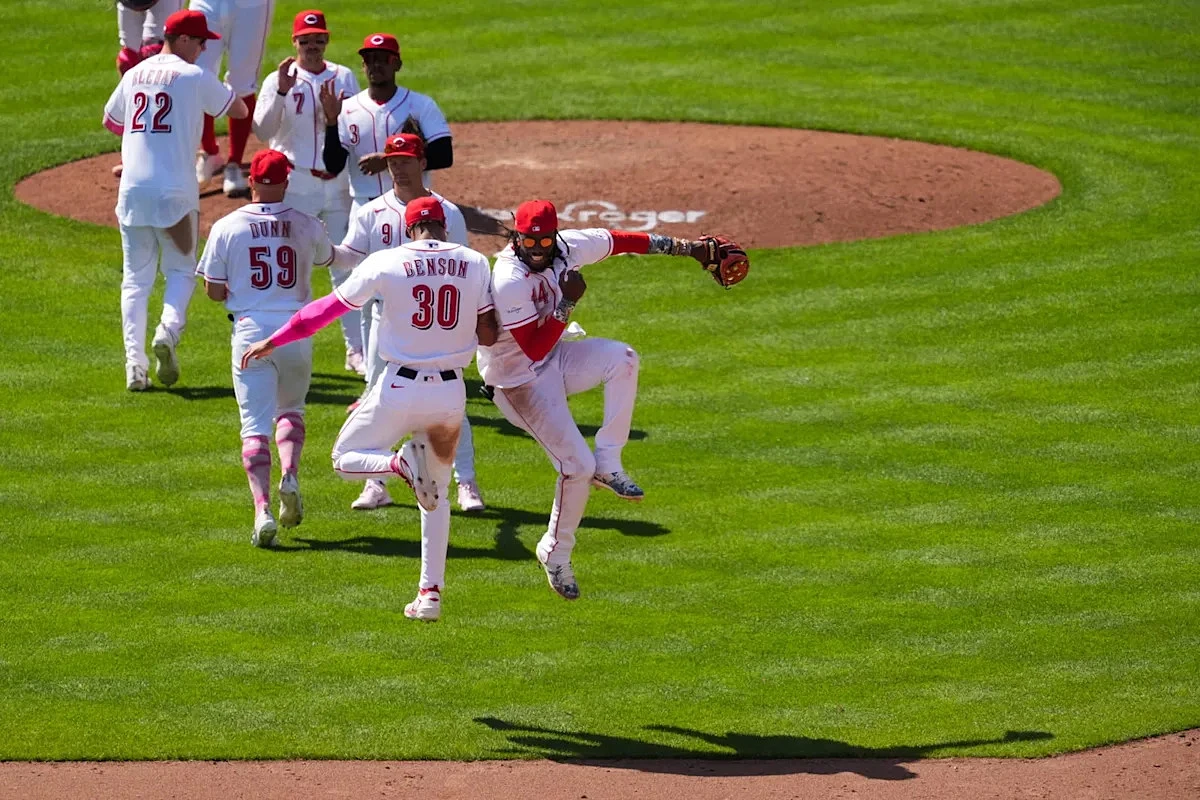
The Cincinnati Reds entered May on a sour note, dropping eight straight games—including a sweep at the hands of the Pittsburgh Pirates and Chicago Cubs, followed by a brutal 10-0 loss to the Houston Astros on Friday. But just when it looked like the wheels were coming off, the Reds flipped the script, taking the next two games against Houston (3-1 and 5-0) to salvage the series and breathe some life back into their season.
Now sitting at 22-19, tied with the Pirates for last place in the NL Central, the Reds have ground to make up—five games behind the first-place Cubs. And with every team in the division sporting a winning record, there’s no room for complacency. The good news? Cincinnati showed resilience. The bad news? There’s still one glaring issue that needs fixing: the bullpen.
During the losing streak, the Reds suffered three walk-off losses to the Cubs, each one exposing a different bullpen weakness. Closer Emilio Pagán blew his third save of the year on Monday, Tony Santillan couldn’t hold the lead in the eighth on Tuesday, and Graham Ashcraft faltered in a 7-6 loss on Wednesday. Those high-leverage hiccups have contributed to Cincinnati’s 23rd-ranked team ERA (4.52), and while Pierce Johnson earned his first save in Saturday’s win over Houston, it’s going to take more than one clean outing to erase the memory of that Chicago meltdown.
The bullpen took a small step forward on Sunday, holding the Astros hitless over the final three innings of a 5-0 shutout. That’s progress—especially against a Houston offense that ranks fifth in MLB with a .762 OPS. But the real test comes next: a home series against the Washington Nationals, who are 19-22 but boast the eighth-best OPS in baseball (.722). Headlined by shortstop CJ Abrams and right fielder James Wood—both sitting in the top 20 in OPS (.918 and .916, respectively)—the Nationals are no pushover.
If the Reds can shut down two of the league’s better offenses back-to-back, that’s a statement. Arms like Ashcraft (1.74 ERA), Sam Moll (1.65 ERA), and Brock Burke (3.06 ERA) could be key to making that happen. For a team that’s shown it can bounce back, the next step is proving they can close the door when it matters most. The talent is there—now it’s about consistency.